

A Great collection of India mythology, mythology" is a collection of stories associated with a culture or institution or person. and in another form A myth is a religious story that involves a higher power or entity. The gods, goddesses, and other supernatural beings who appear in myths are worshipped or revered.
Showing posts with label Legends. Show all posts
Showing posts with label Legends. Show all posts
Thursday, 15 January 2015
A mermaid – JalPari

Monday, 22 December 2014
The Great Tower Temples of Kullu Valley, Himachal Pradesh, India

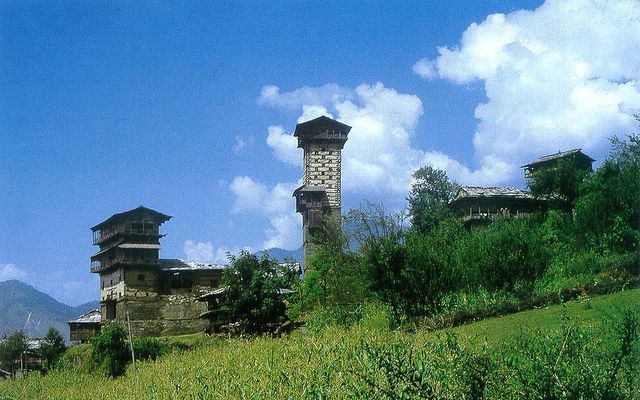

The Great Tower Temples of Kullu Valley, Himachal Pradesh, India are dedicated to “Shringa Rishi” who is the chief deity of Banjar valley, Kullu District, Himchal Pradesh. The temple of Shringa Rishi is situated at village Bagi.This tower temple of Chaini is the tallest standing structure of its kind in the entire Western Himalayas.This tower survived the devastating 1905 Kangra earthquake. It is believed that this temple was built around the 17th Century by a local King Dhadhu and that’s why this temple is locally known as Dhadhiya Kothi as well. The tower temple stands on a plinth, which is almost 15 meters deep, and is made of locally available stone and deodar wood.
Wednesday, 17 December 2014
The Renukaji temple

The Renuka Lake or Temple (672 m) is regarded as the embodiment of Renukaji, the wife of the sage Jamadagini and the mother of Parshurama – one of the ten `Avatars` of Lord Vishnu. Shaped like the profile of a woman, the lake has the circumference of 2.5 km and is the largest in Himachal.
Tuesday, 16 December 2014
ॐ अंग अंगारकाय नमः
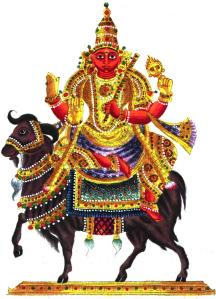

ॐ अंग अंगारकाय नमः
In Vedic astrology Mangala is considered a malefic of the first order. He rules over the signs Mesha (Aries) and Vrishchika (Scorpio), is exalted in Makara (Capricorn) and has his fall in Karka (Cancer). The Sun, Moon and Jupiter are all considered friendly to him, while he is hostile to Mercury. Venus and Saturn are neutral. Mangala represents drive and physical energy, self-confidence and ego, strength, anger, impulsiveness, heroism and adventurous nature. Mangala rules over blood, muscles and bone marrow. He is associated with battle, war and soldiers.
Rinmochan Mangal Stotram: this stotra is very helpful for gaining repayment power for loan. If you are under heavy debt and you are failing control the situation, you may start reciting Rinmochan Mangal Stotram, great relief and help will come.
Soul Practice – The Yoga or Yogi Life’s

Application of Tilak

There are different types of Tilak, each differing in its significance. Tilak is worn on the Ajna Chakra, the centre of forehead, on the space between the eyebrows. Tilak is applied on the point at which the third eye or the spiritual eye is believed to open. All the actions of humans are governed by this specific point. Application of tilak is customary and infact, most of the Hindu ceremonies begin with the application of tilak. Well, Tilak can be made by using sandal paste, turmeric, kumkum or ashes. Depending on the purpose for which Tilak is applied, the material is chosen for preparing the sacred forehead mark.
Indian scriptures
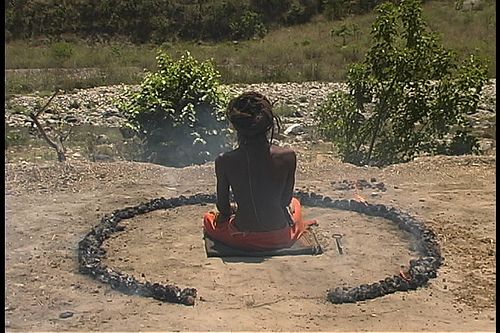
Hinduism has its origins in such remote past that it cannot be traced to any one individual. Some scholars believe that Hinduism must have existed even in circa 10000 B.C. and that the earliest of the Hindu scriptures – The Rig Veda – was composed well before 6500 B.C. The word “Hinduism” is not to be found anywhere in the scriptures, and the term “Hindu” was introduced by foreigners who referred to people living across the River Indus or Sindhu, in the north of India, around which the Vedic religion is believed to have originated.
Monday, 15 December 2014
The Radha-Krishna – love legend of all times
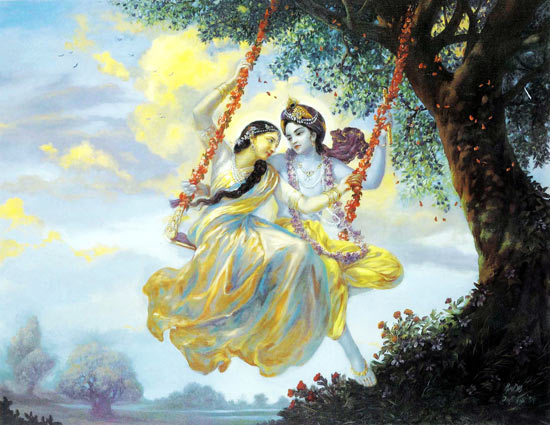

The Radha-Krishna amour is a love legend of all times. It’s indeed hard to miss the many legends and paintings illustrating Krishna’s love affairs, of which the Radha-Krishna affair is the most memorable. Krishna’s relationship with Radha, his favorite among the ‘gopis’ (cow-herding maidens), has served as a model for male and female love in a variety of art forms, and since the sixteenth century appears prominently as a motif in North Indian paintings. The allegorical love of Radha has found expression in some great Bengali poetical works of Govinda Das, Chaitanya Mahaprabhu, and Jayadeva the author of Geet Govinda.Radha, daughter of Vrishabhanu, was the mistress of Krishna during that period of his life when he lived among the cowherds of Vrindavan. Since childhood they were close to each other – they played, they danced, they fought, they grew up together and wanted to be together forever, but the world pulled them apart. He departed to safeguard the virtues of truth, and she waited for him. He vanquished his enemies, became the king, and came to be worshipped as a lord of the universe. She waited for him. He married Rukmini and Satyabhama, raised a family, fought the great war of Ayodhya, and she still waited. So great was Radha’s love for Krishna that even today her name is uttered whenever Krishna is refered to, and Krishna worship is though to be incomplete without the deification of Radha.
Classical Hinduism

An important idea that developed in classical Hinduism is that dharma refers especially to a person’s responsibility regarding class (varna) and stage of life (ashrama). This is called varnashrama-dharma. In Hindu history the highest class, the Brahmins, adhered to this doctrine. The class system is a model or ideal of social order that first occurs in the oldest Hindu text, the Rig Veda and the present-day caste (jati) system may be rooted in this.
Sunday, 14 December 2014
The Shiva Linga

The legend of Shiva Linga or Lingodbhavamurthy is deeply related to Mahashivaratri. The legend narrates the story of vain search by Brahma and Vishnu to discover the Aadi (beginning) and the Antha (end) of Lord Shiva. The legend thus proves the supremacy of Lord Mahadeva over other Hindu Gods and explains why the lingam is believed to be one of the most potent emblems in Hindu ideals. The story is stated in the three of the puranas – the Kurma Purana, the Vayu Purana and Shiva Purana
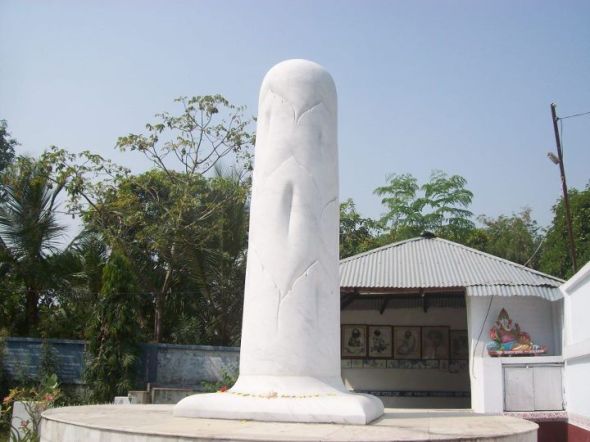
According to Puranas, once the other two of the triads of Hindu Gods, Brahma and Vishnu were fighting over each other’s prowess. Horrified at the intensity of the battle, the other gods asked Shiva to intervene. To make them realize the futility of their fight, Lord Shiva assumed the form of a flaming Linga in between Brahma and Vishnu and challenged both of them by asking them to measure the gigantic Linga (phallic symbol of Lord Shiva). Awestruck by its magnitude, Brahma and Vishnu decided to find one end each to establish supremacy over the other. Lord Brahma took the form of a swan and went upwards while Lord Vishnu assumed the form of Varaha – a boar and went into the earth towards nether land. Both searched for thousands of miles but neither could find the end.

The Shiva Tandava -as the destroyer of the universe.
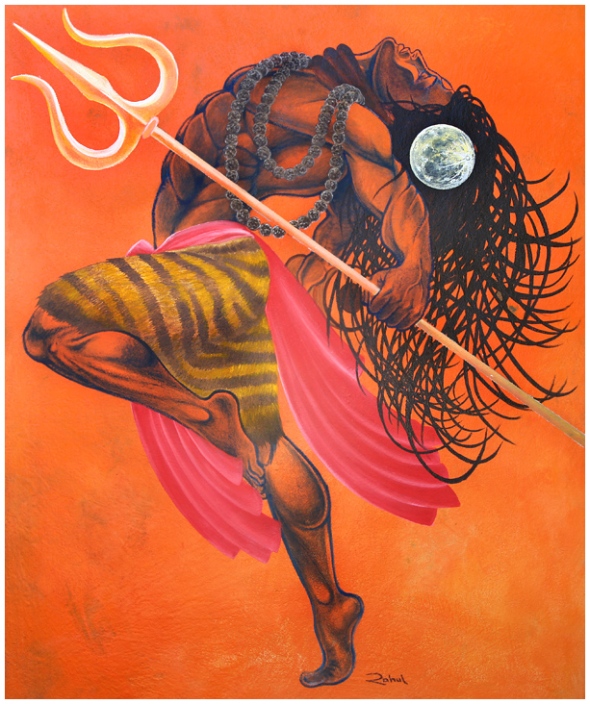
Lord Shiva is also known as Nataraj, the Dancing God. This divine art form is performed by Lord Shiva and his divine consort Goddess Parvati. The dance performed by Lord Shiva is known as Tandava. Shiva’s Tandava is a vigorous dance that is the source of the cycle of creation, preservation and dissolution. Tandava depicts his violent nature as the destroyer of the universe.
A churel – A female ghost of South Asian folklore
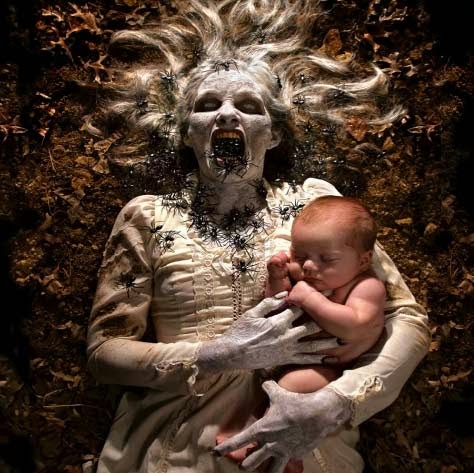
A churel, also spelled as churail, chudail or chudel is a female ghost of South Asian folklore, which is equivalent of Lilith and well known in North India, Bangladesh and Pakistan. The word “churel” is also used colloquially for a witch.
India is a land of myths & legends – centuries of profound history has given this land endless fables rising from every nook & corner. When it comes to ghostly icons, one is obviously drawn to the globally acclaimed vampires, werewolves & Halloween charades. However, it is quite interesting to note that Indian Ghost Stories have its own counterparts to compete with this global folklore, some of which have more horrifying track records. The Indian counterpart for the witch is called Chudail or Chudel (चुड़ैल )(pronounced as chew-dale). In many places, it is also referred to as Daayan (डायन) (pronounced as dye-en), although there are many conceptual difference of opinions between these two terms regardless of their common origin. A Chudail is an Indian Witch or Female Ghost and is believed to arise from the death of a woman during child birth. Indian witch stories have many variations across the different states of India. For e.g. the north Indian states often believe that the Chudail can change its physical form and lure young men. Once she lures them into a lonely place, she pounces on them to either kill or have physical contact with them. In both the cases, the victim is supposedly drained off his life. The Chudail is supposed to live near graveyards or deep inside the forests.
Subscribe to:
Posts (Atom)