Are you looking for Inspired writer, Contact author vikas acharya - +91-9911275074 Email: theacharyaa@gmail.com

Showing posts with label Diety. Show all posts

Friday, 8 May 2015

Mritasanjeevani - an herb which cures one of all diseases.

मंत्र
ॐ ओं जों सः ओं  भूर्भुवः स्वाहा |
ॐ  त्रियम्बकं यजामहे सुगन्धिं पुष्टिवर्धनं उर्वारुकमिव बन्धनान् मृत्योर्मोक्षिय मामृतात्.|
हों ओं जू सः ओं भूर्भुवः स्वाहा l

Mantra in English:
Om Aom Jom Sah Aom Bhurbuva Swaha |
Om Trayambakam Yajamahe Sugandhim Pushtivardhanam Urva Rukamiva Bandhanaan Mrityor Mokshiye Maamritat.|
Hom Aom Joom Sah Aom Bhurbuva Swaha |

India Myths


Wednesday, 6 May 2015

ॐ भूर्भुवः स्वः

 ॐ भूर्भुवः स्वः तत्सवितुर्वरेण्यम्
           भर्गो देवस्य धीमहि धियो यो नः प्रचोदयात् ॥ ॥

India Myths

Wednesday, 28 January 2015

Lord Indra – Indian god of rain


Lord Indra, the Indian god of rain, is believed to be the leader of all the Devas. He is the son of Aditi and sage Kashayapa. His capital city is Amravati, in the heavens. He possesses an elephant known as Iyravata and a divine cow named Kamadhenu. This cow is capable of yielding anything desired by the seekers and hence Indra is very rich.
Indra is the principal deity of the Rig Veda. Most of the hymns in this primary text of Hinduism are addressed to him. Indra, is all powerful and supreme among gods. He is the lord of the skies, of thunder and rain.
Story goes that his mother Aditi knew he would never perish and so when she sensed some danger to herself, she decided to abandon the child, knowing full well that he would survive wherever he went. But Indra refused to go and followed his mother. He chanced to drink some the juice of the soma plant (intoxicant) and so gained even greater strength. Then when the demon Vrtra advanced towards his house, Aditi tried to hide Indra, but Indra plunged into a full fledge battle. Vrtra blocked rivers and so caused great sorrow to the followers of Indra. This battle is recorded as one of the most famous ones in Hindu mythology. Though Indra is said to have sought the blessings and support of Lord Vishnu, his victory over Vrtra made him a legend even in his times.


Tuesday, 27 January 2015

“Om Hrim Sum Suryaya Namah”


“Om Hrim Sum Suryaya Namah”
The mantras are chanted on japa beads of 108 beads per string.
In Vedic astrology, the Sun is the principal of light, life and love

Thursday, 15 January 2015

Sanjeevani Booti – The only magical Plant (Booti) curing any woe


Sanjeevi is the name of the mountain with auspicious and medicinal plants on it. In Hinduism this mountain is said to be very sacred. Lord Hanuman brought this mountain with the medicinal plants from Dronagiri to cure Lakshman who had fainted in the war. It is mentioned in Ramayana that during the war between Rama and Ravana, Inderjit sent a powerful weapon towards Lakshmana. He was badly wounded and fell unconscious. Ayurvedic Physicians found that the wound had done deep enough to kill him. Hanuman was called to fetch Sanjeevani Booti from the Mount Sumeru in the Himalayas. Upon reaching the mountain, Hanuman failed to identify the magical herb and carried the entire mountain to the battlefield. Within a few minutes of smelling this life saving medicinal herb , Lakshmana gained consciousness and vigor to fight in the war. According to Hindu mythology, the herb called Sanjeevani Booti is capable of curing any woe irrespective of its type and origin.

Monday, 22 December 2014

The Viswanath Temple


The Viswanath Temple is the most important and ancient holy shrine in this region. Of the many temples in Uttarakhand, the temple of Lord Vishwanath is dedicated to Lors Shiva, the presiding deity of this temple, is worshipped all day here. Every evening, visitors are greeted by the sound of bells, and the chanting of mantras by pundits at the puja.Within the courtyard of the Vishwanath temple, and to the front of it, is the Shakti Temple, dedicated to the goddess of strength.

Wednesday, 17 December 2014

The search of Secret India

The true Self will not be discovered, but it will transform you utterly in that Self.
The true Self will not be discovered, but it will transform you utterly in that Self
The mind, devoid of its passions, becomes like a well-tamed animal, obedient, useful, more productive and more exact.

Tuesday, 16 December 2014

Pure Heart & Delight soul

SADHU

The man who is pure of heart Is bound to fulfill himself In whatever way he is taught. A worldly man seeks all his life, But is still bewildered. Detached from the senses, You are free. Attached, you are bound. When this is understood, You may live as you please.
Astavakra Gita

Sadhana – Spiritual Evolution

               SADHU

For those who want to seriously practice kriyas, it is time to formulate a specific sadhana. Sadhana means “endeavoring to obtain a particular result.” The result kriyabans seek is accelerated spiritual evolution. Sadhana becomes a powerful method to achieve this result. There are three important aspects of sadhana: choice, commitment and aspiration. The first stage of sadhana is to choose a practice. Even the most simple sadhana will be challenging to the newcomer. Consider the sadhana of lighting a candle every night, then immediately blowing it out. Nothing more or nothing less. Do this for ninety days. You will observe the mind coming up with every reason why you shouldn’t do it and every excuse why you missed a few (or many) nights. Yet by accepting it as a sadhana, you make a choice to do it and it becomes a spiritual practice.

Indian scriptures

sadhu tap
Hinduism has its origins in such remote past that it cannot be traced to any one individual. Some scholars believe that Hinduism must have existed even in circa 10000 B.C. and that the earliest of the Hindu scriptures – The Rig Veda – was composed well before 6500 B.C. The word “Hinduism” is not to be found anywhere in the scriptures, and the term “Hindu” was introduced by foreigners who referred to people living across the River Indus or Sindhu, in the north of India, around which the Vedic religion is believed to have originated.

River Ganga – India’s National River

Gomukh

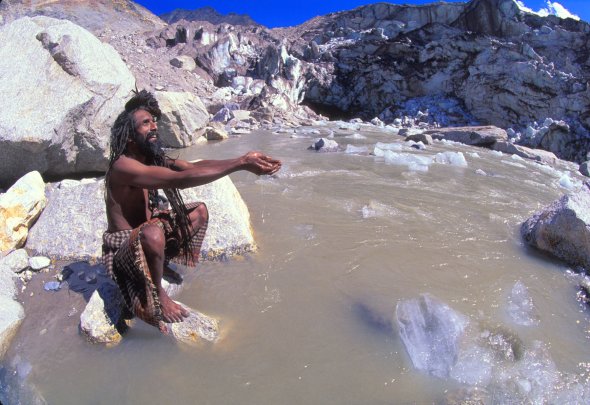
The origin of river Ganges lies at the height of 13,800 feet in the mountain ranges of Himalayas, in Tehri Garhwal, near Gangotri. It begins high in the Himalayas as a pair of head streams. It begins in an ice cave in the mountains about 10,300 feet above sea level. Gangotri is known as the place of origin of the revered Ganges river, known as Ganga in India it is also consider one of the holy place in chota char dham . The holiest of the Indian rivers, is the longest river in India and the greatest waterway in India. The river has been declared as India’s National River. Ganges is the source of sustainment of life in the great Indian plains and it is at Gangotri that the journey of Ganga begins. River Ganges gets water from the melting snow of Nanda devi, Gurla, Mandhata, Dhaulagiri, Gesaisthan, Kanchenjunga and Mount Everest. Many small and big rivers merge with the Ganges in the Himalayan region. The Ganges river flows through Bangladesh, but the greater part of it flows through India. The river flows across the northern corner of India. The Ganges flows across India and Bangladesh until it empties out into the Bay of Bengal. The great river provides water to many places, and many places rely on it.
Shiva-Rishikesh

         Ganga
There are many versions of stories regarding the origin of Ganges. In another story the sage Valmiki of Ramayana, Ganges was the daughter of ‘Himalaya’ and ‘Maina’. The deities abducted her and took her to heaven and from then onwards, ‘Ganga’ started living inside the ‘Karmandala’ . According to Kritivas Ramayana the deities had taken ‘Ganga’ to Lord Shiva to get her married with him. When ‘Maina’ did not find her in the house, she cursed to attain the form of water.

Monday, 15 December 2014

Universal law – Dharma

sadhu

Dharma is an important term in Indian religions. In Hinduism it means ‘duty’, ‘virtue’, ‘morality’, even ‘religion’ and it refers to the power which upholds the universe and society. Hindus generally believe that dharma was revealed in the Vedas although a more common word there for ‘universal law’ or ‘righteousness’ is rita. Dharma is the power that maintains society, it makes the grass grow, the sun shine, and makes us moral people or rather gives humans the opportunity to act virtuously.

Sunday, 14 December 2014

The Shiva Linga

Lingam
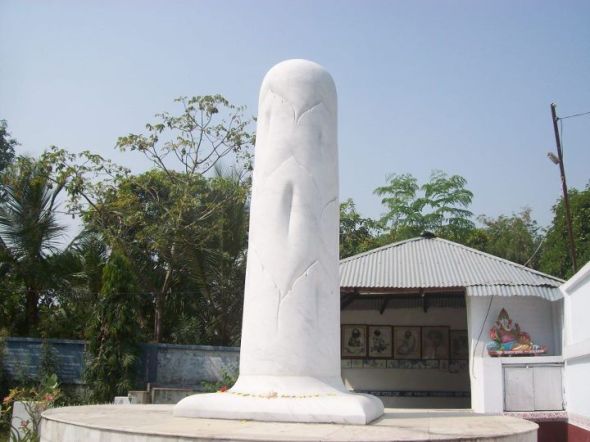
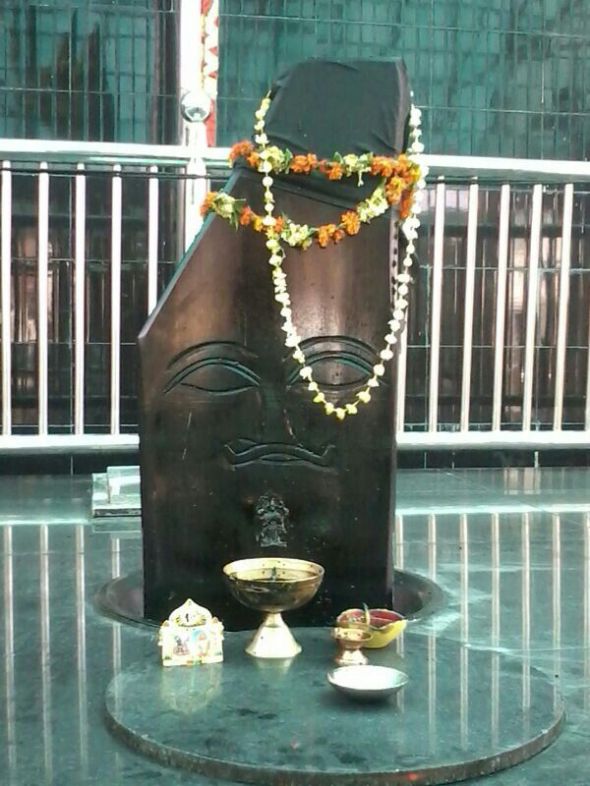
The legend of Shiva Linga or Lingodbhavamurthy is deeply related to Mahashivaratri. The legend narrates the story of vain search by Brahma and Vishnu to discover the Aadi (beginning) and the Antha (end) of Lord Shiva. The legend thus proves the supremacy of Lord Mahadeva over other Hindu Gods and explains why the lingam is believed to be one of the most potent emblems in Hindu ideals. The story is stated in the three of the puranas – the Kurma Purana, the Vayu Purana and Shiva Purana
Shiva_Lingam
According to Puranas, once the other two of the triads of Hindu Gods, Brahma and Vishnu were fighting over each other’s prowess. Horrified at the intensity of the battle, the other gods asked Shiva to intervene. To make them realize the futility of their fight, Lord Shiva assumed the form of a flaming Linga in between Brahma and Vishnu and challenged both of them by asking them to measure the gigantic Linga (phallic symbol of Lord Shiva). Awestruck by its magnitude, Brahma and Vishnu decided to find one end each to establish supremacy over the other. Lord Brahma took the form of a swan and went upwards while Lord Vishnu assumed the form of Varaha – a boar and went into the earth towards nether land. Both searched for thousands of miles but neither could find the end.
Shivling

Om Namah Shivaya

sadhvi
    Aum
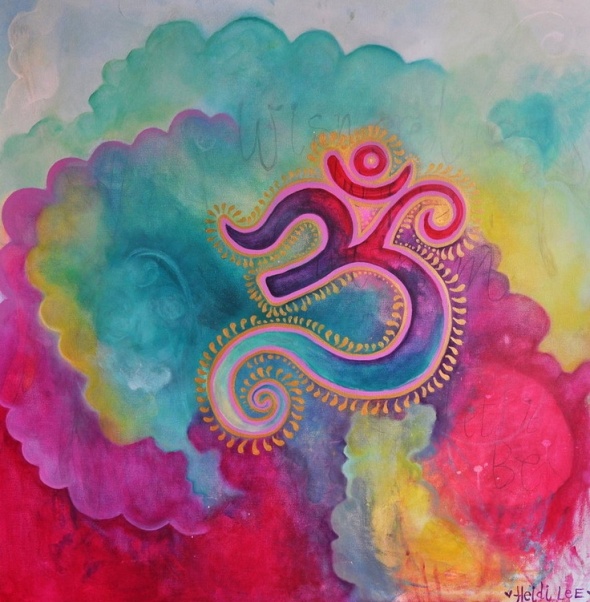
Om or Aum is the pranava or seed mantra of all mantras. The two syllables na- and mah- can be translated as “I humbly bow to you”. The three syllables shi-vaa-ya invoke Lord Shiva and all his energies to bless us and lead us to the highest state of peace and meditation. The mantra should ideally be chanted twice a day (morning and evening) for 108 times each. The two words, namah and shivaya, are also referred to as the panchakshara (five letter) chant. It is said that those who chant these five holy letters while meditating on Lord Shiva will be blessed by visions of Shiva – the Lord of the yogis.

Statue of God – The sadhu

     bal sadhu
India is the Land of Gods, and we see and serve to god in the form of sadhu….
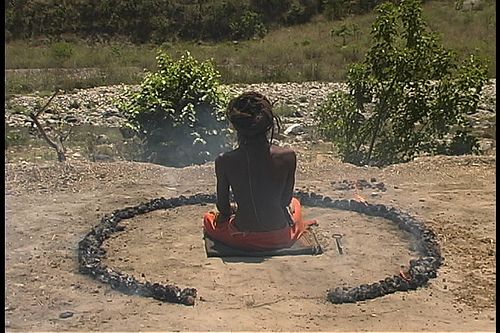
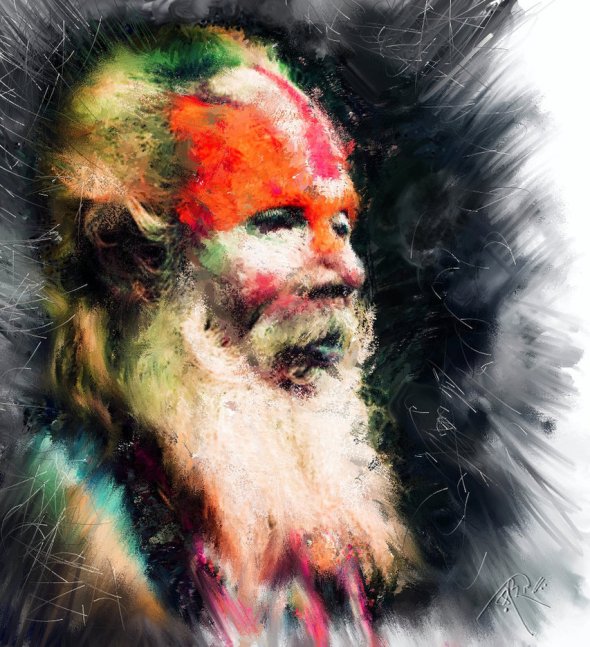
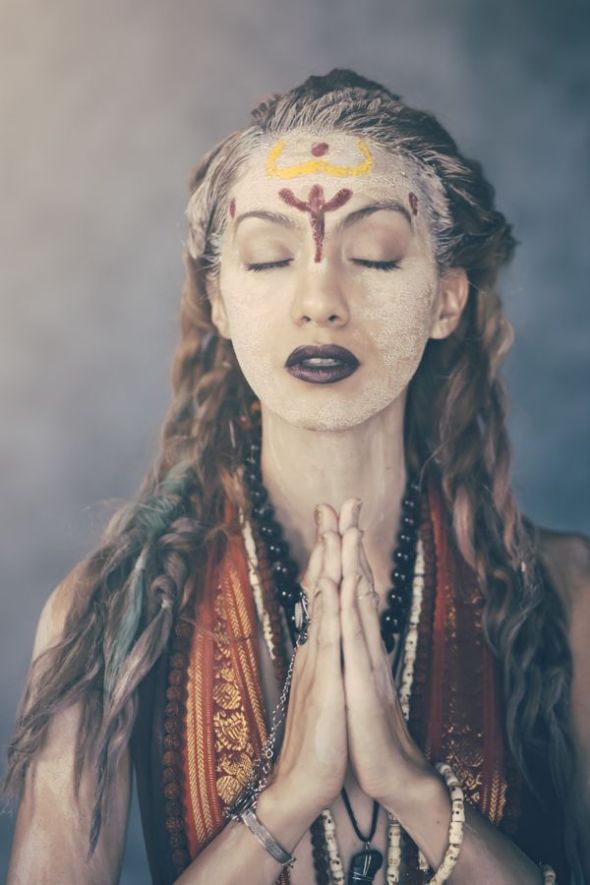
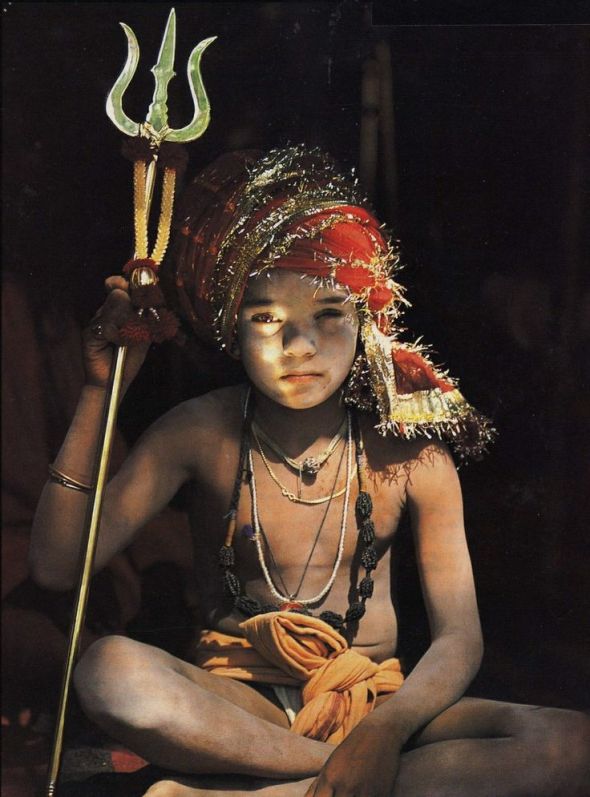
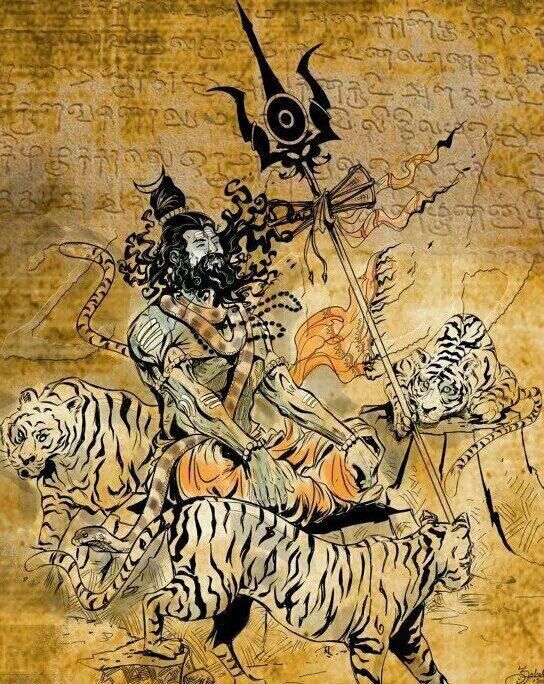
The Sadhu usually wears on his forehead the three lines of the god’s trident drawn in ash or sandalwood paste which may be vertical or horizontal. Endless variations of these sectarian marks, depending on the sect, are possible. They may decorate their bodies with various lines and markings, cover the entire torso with ashes, carry a metal trident and wear rosaries. The hair and the beard are uncut and matted.The Sadhu is credited with much of the development of Indian culture, art, architecture, music, poetry and literature, influencing and forming the very world he has abandoned with his endless travels from one sacred site to another, singing songs and reciting poetry and carrying icons, paintings and other sanctified objects.

lord of the cremation – Shiva

                          shiva
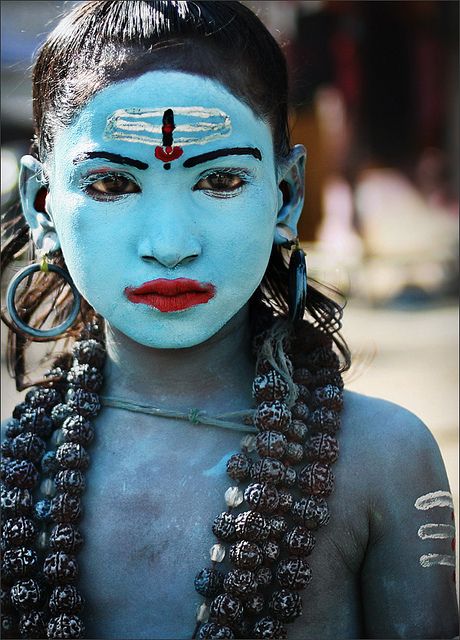
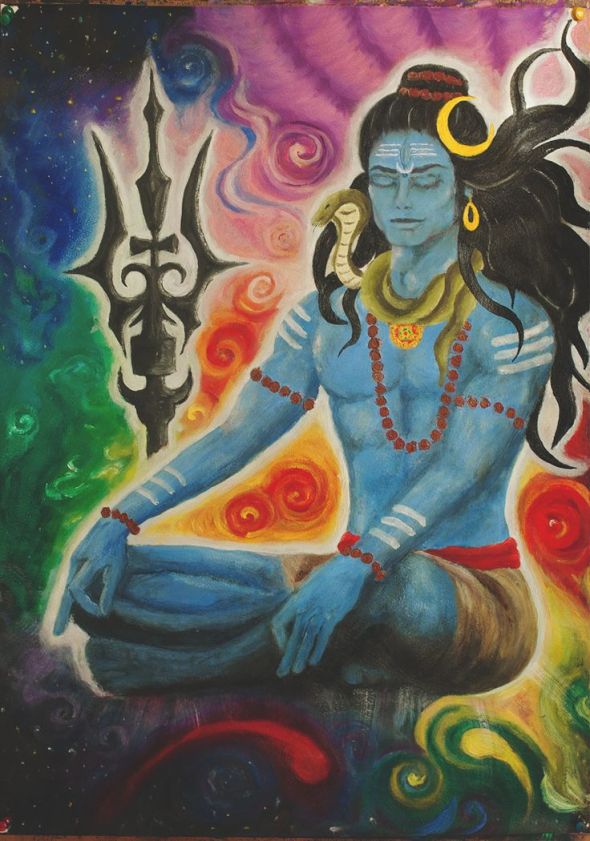
Shiva, the third god of the Hindu triadition, has three eyes, the third one (between the eyebrows) being usually closed, except at the time of destruction of things. He wears long hair, supports the holy Ganga river on his head and the crescent moon on his matted hair. He has two to four arms, holds a trident in his hand, is naked except for a tiger-skin, besmears himself with ash and is decorated with snakes on his head, neck and arms. He is very fair-coloured but has a blue throat due to his having drunk poison during the time of the churning of the ocean by the gods. In his other hands he holds an axe, an antelope, and an hour-glass shaped drum called a ‘damru’. He wears a garland of skulls and is also known as the lord of the cremation grounds. His consort is Parvati and he is the father of Ganesha and Skanda (Kartikeya). His vehicle is the bull called Nandi.

The Mahamrityunjaya – Victory from death

shiva.
Mahamrityunjaya Mantra is one among the finest Mantra’s in Indian Mythology and Spirituality belongs to Lord Shiva.It is a combination of three hindi language words i.e. “Maha” which means Great , “Mrityun” means Death and “Jaya” means Victory which turns into Conquer or victory over death. It is also known as “Rudra Mantra” or “Trayambakam Mantra”. Rudra refers to Lord Shiva.
Om Trayambakam Yajamahe, Sugandhim Pushti Vardhanam,
Urvarukmiv Bandhanat, Mrityurmokshaya Mamratat.

त्रयम्बकं यजामहे सुगन्धिं पुष्टिवर्धनम् ।
उर्वारुकमिव बन्धनान् म्रुत्योर्मुक्षिय मामृतात् ॥

The Shani Dev – one of the nine Navagraha or planets

799c8f85f8b7f5ff8ee2de3b53eaf996

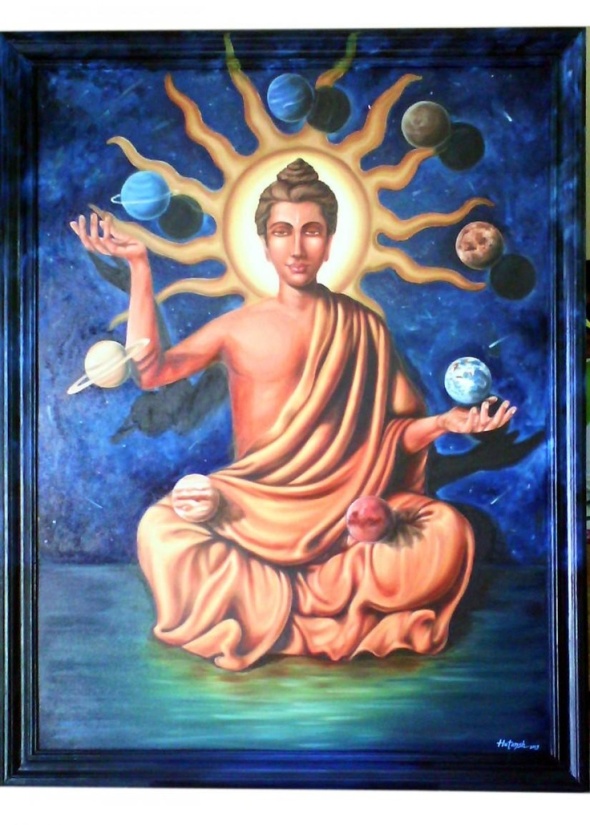
ShaniDev is one of the (Planet)”Navagraha ”which are the nine primary celestial beings in Hindu astrology, or Mtyhs. The word Shani (Saturday) also denotes the Seventh day or Saturday in most Indian languages.Shanaye Kramati – the one who moves slowly, as Saturn takes about 30 years to rotate around the Sun. Shani is also known as Shanaiscarya, Shani Bhagavan, Shaneesvara, Saneesvara, Shaneesvaran, Shani Deva.

Shani is a Lord and son of Surya (the Sun God) and his wife Chhaya (goddess of Shadow) and hence also known as Chayyaputra. He is the cousin of Yama, the Hindu God of death. It is said that when he opened his eyes as a baby for the very first time, the sun went into an eclipse, which clearly denotes the impact of Shani on astrological charts. He is known as the greatest teacher. He is known in Hindu scriptures as the greatest trouble maker as well as the greatest well wisher. He is depicted dark in colour, wearing cloths in black, holding a sword, arrows and two daggers and variously mounted on a black vulture or a raven.

The Sura Dev – The maker of day

       10cc4a0d657ef070f52d40133c4f874f
Surya (Sun God) is the chief solar deity in Hinduism.In Hindu religious literature, Surya is notably mentioned as the visible form of God that one can see every day.Surya is the son of Sage Kashyapa and Aditi.He has two wives Samnja and Chaya.Surya is, the ruler of the worlds, who is crowned with rays, who appears at the horizon, who is greeted by gods and demons, and brings light.He constitutes created beings, He is the life-breath, the source of the seasons, the store-house of light, an offspring of Aditi, the progenitor, the Sun-God, the courser in the heavens, the nourished, the possessor of rays, the golden, the brilliant, the One whose energy constitutes the seed of the universe and the maker of day.

The Shiva MahaPuran

            shivpuran

The Shiva Purana has twenty-four thousand shlokas.  There are total 18 Paranas. and number of Uppuranas. Shiva Mahapuran is one of them. Each Purana represents one God and describes him as the supreme most and glorifies him. The Purana consists of other relevant anecdotes and stories, also which make it more interesting . At the same time, it makes us available . Some historical facts, also . By studying these Puranas., we can learn how to find some solace while experiencing struggle and hardships in life. Puranas. have kept our cultural values alive. They have nurture our spiritual progress, also.