Are you looking for Inspired writer, Contact author vikas acharya - +91-9911275074 Email: theacharyaa@gmail.com

Showing posts with label Lord. Show all posts

Tuesday, 27 January 2015

“Om Hrim Sum Suryaya Namah”


“Om Hrim Sum Suryaya Namah”
The mantras are chanted on japa beads of 108 beads per string.
In Vedic astrology, the Sun is the principal of light, life and love

The Holy Saint Baba Parkashpuri Ji

Baba prakash puri jiBaba prakash puri ji
A divine soul took birth In the latter half of nineteenth century on an auspicious Thursday. The day of the birth of this divine consciousness fell on Guru Purnima (a full moon day falling on the day dedicated to the Guru). In childhood Satya Parkash was having an extra ordinary dream regularly and repeatedly. he was wearing the saffron clothes. He, now, started enjoying the company of holy men and saints. It seemed that he was gradually moving towards the illumined world of school and moving towards the illumined world of spirituality. He would humbly present to the sadhus whatever he possessed. Slowly, but certainly, his mind now was moving towards the world of renunciation and detachment. Giving up the school education, Satya Prakash become eager to sit at the feet of a Sadguru so that he could realize his spiritual self. After renouncing home and family, the young Satya Prakash went to Sri shail Mountain to have a darshan (holy glimpse) of Sri mallika-arjin Jyotirlingam (Luminous phallic symbol, an emblem of Lord Shiva). Satya Prakash believed that there was no religious practice better than service to the Guru, Baba Guptpuri made him an adept in all the techniques of Yoga and meditation. Not only this, he showered his affection by regressing his disciple with his spiritual powers and boons. Baba Prakashpuri was a man of detachment.. However, for his attendants and disciples he was very kind-hearted and generous. Baba Prakashpuri was a simple, and inostentatious saint . He was at peace with his own inner self. Babaji was a Sadguru (worthy preceptor), a siddh (manifested with magical power) saint. He was a man of few words, and those words are always positive.

Tuesday, 23 December 2014

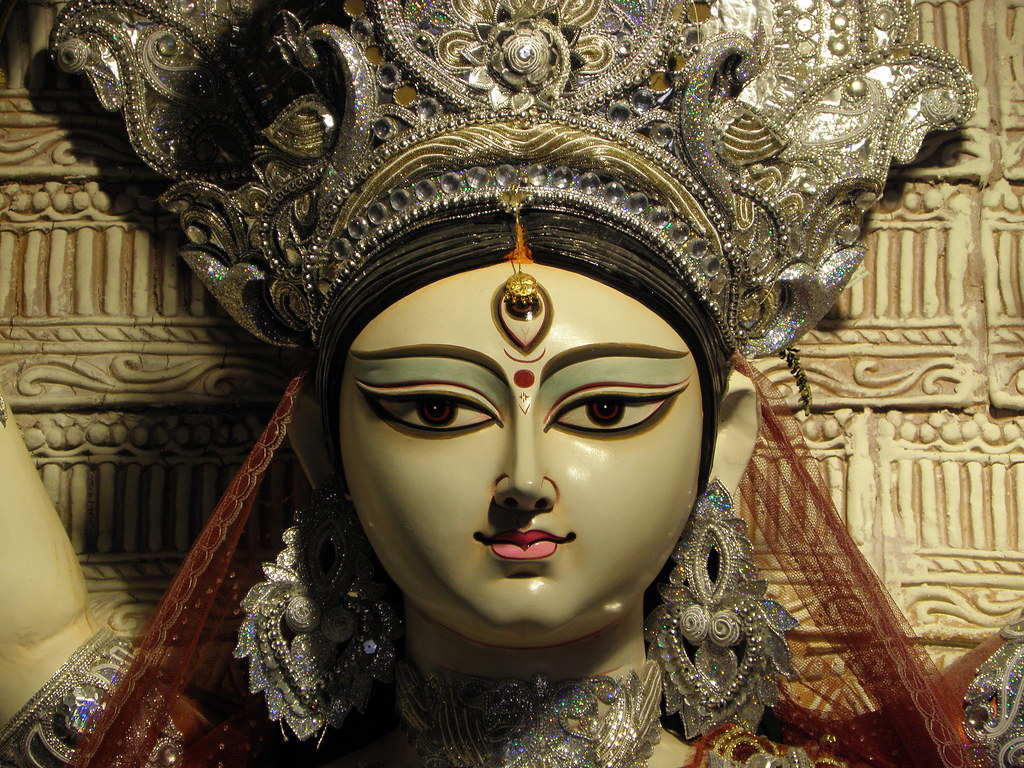
Durga Maa – The power of the Supreme


Durga Maa (Mother) Durga symbolizes the power of the Supreme.Durga – the goddess of power and strength, is perhaps the most important goddess of the Hindus.Maa Durga Goddess Durga is considered the Mother of the Universe.
रक्षांसि यत्रोग्रविषाश्च नागा यत्रारयो दस्युबलानि यत्र |
दावानलो यत्र तथाब्धिमध्ये तत्र स्थिता त्वं परिपासि विश्वम् ||

Monday, 22 December 2014

The YAGYA – means sacrifice, prayer


Yagya involves the application of specific prescribed sounds (Mantras), extracted from the Vedas, through recitation on a fine level of awareness by trained Vedic experts to achieve a specific effect: for example, to eliminate obstacles or defuse impending dangers, or to promote health, financial success—even world peace.

Wednesday, 17 December 2014

Aghori – The Epic Souls

      Aghori
To be really aware you must be able to know simultaneously what is going on thousands of miles away today, what may have happened centuries ago, what will happen anywhere in the world decades from now, and what is occurring, has occurred, or will occur on other planes of existence. And you must still act as if you know nothing. You must just sit and talk with other people and play the part which Nature has assigned to you.

True love is selfless

True love is selfless

True love is selfless. It is prepared to sacrifice “Sadhu Vaswani”

Tuesday, 16 December 2014

Jyotish - the oldest system of astrology in the world

              KarmJyotish                                               Jyotish is the oldest system of astrology in the world. It’s derived

from  the  Sanskrit  word  “jyoti”  which means light.  As the pure
light of  scientific knowledge, the word Jyotish implies studying a
person’s  character,  health,  habits  and  even the future on the
basis of his or her birth chart. Jyotish  is  practiced  by  a  skilled   astrologer  by  calculating   the positions  of the  planets and  other celestial bodies with regard to a person’s birth or  happening of an event.

MahaKumbh Mela – opportunity to purify our soul by bathing in holy river and serving saints.

sadhu
For twelve days and twelve nights (equivalent to twelve human years) the gods and demons fought in the sky for possession of this pot of Amrita. From this nectar some drops spills at Allahabad, Haridwar, Ujjain and Nashik while they were fighting for nectar . So on earth we celebrate this festival to get the pious credits and meet the purpose of life that is going to back to godhead  our eternal home where our father is waiting for us. This is opportunity we get after associating with saints or holy man who follow scriptures.
Kumbh mela provides us this great opportunity to purify our soul by bathing in holy river and serving saints.

Soul Practice – The Yoga or Yogi Life’s

naga

In the Classical Sanskrit of the Puranas, the word yogi  originally referred specifically to a male practitioner of yoga. In the same literature yoginī is the term used for female practitioners as well as for divine goddesses and enlightened mothers, all revered as aspects of the Divine Mother Devi without whom there would be no yogis. The two terms are still used with those meanings today, but the word yogi is also used generically to refer to both male and female practitioners of yoga and related meditative practices in Buddhism, Jainism.

Pure Heart & Delight soul

SADHU

The man who is pure of heart Is bound to fulfill himself In whatever way he is taught. A worldly man seeks all his life, But is still bewildered. Detached from the senses, You are free. Attached, you are bound. When this is understood, You may live as you please.
Astavakra Gita

Application of Tilak

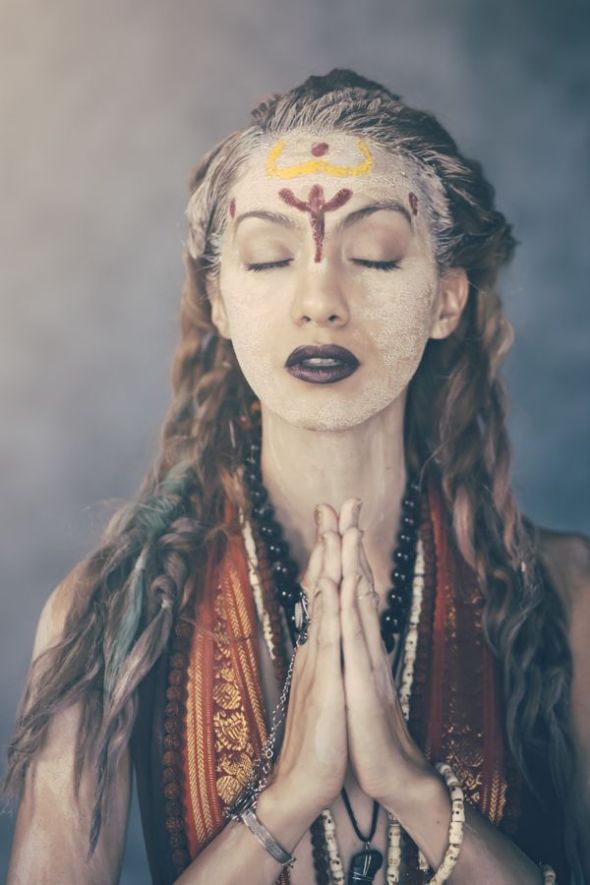
tilak

There are different types of Tilak, each differing in its significance. Tilak is worn on the Ajna Chakra, the centre of forehead, on the space between the eyebrows. Tilak is applied on the point at which the third eye or the spiritual eye is believed to open. All the actions of humans are governed by this specific point. Application of tilak is customary and infact, most of the Hindu ceremonies begin with the application of tilak. Well, Tilak can be made by using sandal paste, turmeric, kumkum or ashes. Depending on the purpose for which Tilak is applied, the material is chosen for preparing the sacred forehead mark.

Monday, 15 December 2014

Lohri – The Harvest Festival of North India


Lohri is an extremely popular Punjabi agricultural winter festival celebrated throughout Punjab and in Haryana, Himachal Pradesh, Delhi and Jammu.The harvest festival of Punjab and Haryana is also referred as the bonfire festival. Huge bonfires are lit to thanks the God for abundant crops.It is celebrated on 13th of January during the month of Paush or Magh, a day before Makar Sankranti. This festival marks the departure of the winter season and onset of spring.

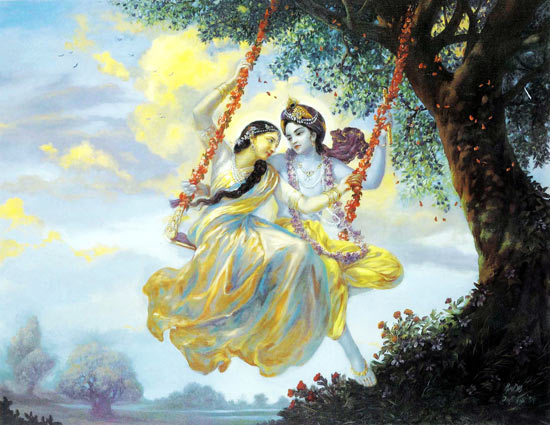
The Radha-Krishna – love legend of all times

                 
radha-krishna

radha krishna

The Radha-Krishna amour is a love legend of all times. It’s indeed hard to miss the many legends and paintings illustrating Krishna’s love affairs, of which the Radha-Krishna affair is the most memorable. Krishna’s relationship with Radha, his favorite among the ‘gopis’ (cow-herding maidens), has served as a model for male and female love in a variety of art forms, and since the sixteenth century appears prominently as a motif in North Indian paintings. The allegorical love of Radha has found expression in some great Bengali poetical works of Govinda Das, Chaitanya Mahaprabhu, and Jayadeva the author of Geet Govinda.Radha, daughter of Vrishabhanu, was the mistress of Krishna during that period of his life when he lived among the cowherds of Vrindavan. Since childhood they were close to each other – they played, they danced, they fought, they grew up together and wanted to be together forever, but the world pulled them apart. He departed to safeguard the virtues of truth, and she waited for him. He vanquished his enemies, became the king, and came to be worshipped as a lord of the universe. She waited for him. He married Rukmini and Satyabhama, raised a family, fought the great war of Ayodhya, and she still waited. So great was Radha’s love for Krishna that even today her name is uttered whenever Krishna is refered to, and Krishna worship is though to be incomplete without the deification of Radha.

Dharma shastras

sadhu
Hinduism developed a doctrine that life has different goals according to a person’s stage of life and position. These goals became codified in the ‘goals of a person’ or ‘human goals’, the purusharthas, especially in sacred texts about dharma called ‘dharma shastras’ of which the ‘Laws of Manu’ is the most famous. In these texts three goals of life are expressed, namely virtuous living or dharma, profit or worldly success, and pleasure, especially sexual pleasure as a married householder and more broadly aesthetic pleasure. 

Sunday, 14 December 2014

Sadhana – sacred gestures

    sadhu
Sadhana in Hindu and Buddhist Tantrism, spiritual exercise by which the practitioner evokes a divinity, identifying and absorbing it into himself-the primary form of meditation in the Tantric Buddhism of Tibet. Sadhana involves the body in mudras (sacred gestures), the voice in mantras (sacred utterances), and the mind in the vivid inner visualization of sacred designs and the figures of divinities. Detailed instructions on how the images are to be visualized and the appropriate mantra for each are contained in written sadhanas of most divinities. One such collection is the Sadhanamala (Sanskrit: “Garland of Realization”), composed perhaps between the 5th and the 11th century. This collection of some 300 sadhanas includes those designed for various practical results as well as those intended to further spiritual realization. The written sadhanas also serve to instruct sculptors and painters.

The Shiva Linga

Lingam
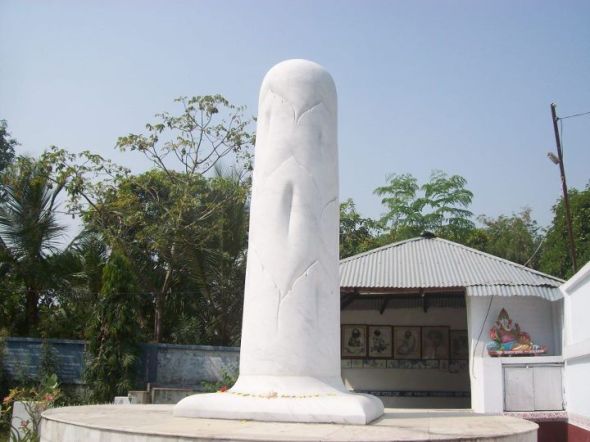
The legend of Shiva Linga or Lingodbhavamurthy is deeply related to Mahashivaratri. The legend narrates the story of vain search by Brahma and Vishnu to discover the Aadi (beginning) and the Antha (end) of Lord Shiva. The legend thus proves the supremacy of Lord Mahadeva over other Hindu Gods and explains why the lingam is believed to be one of the most potent emblems in Hindu ideals. The story is stated in the three of the puranas – the Kurma Purana, the Vayu Purana and Shiva Purana
Shiva_Lingam
According to Puranas, once the other two of the triads of Hindu Gods, Brahma and Vishnu were fighting over each other’s prowess. Horrified at the intensity of the battle, the other gods asked Shiva to intervene. To make them realize the futility of their fight, Lord Shiva assumed the form of a flaming Linga in between Brahma and Vishnu and challenged both of them by asking them to measure the gigantic Linga (phallic symbol of Lord Shiva). Awestruck by its magnitude, Brahma and Vishnu decided to find one end each to establish supremacy over the other. Lord Brahma took the form of a swan and went upwards while Lord Vishnu assumed the form of Varaha – a boar and went into the earth towards nether land. Both searched for thousands of miles but neither could find the end.
Shivling

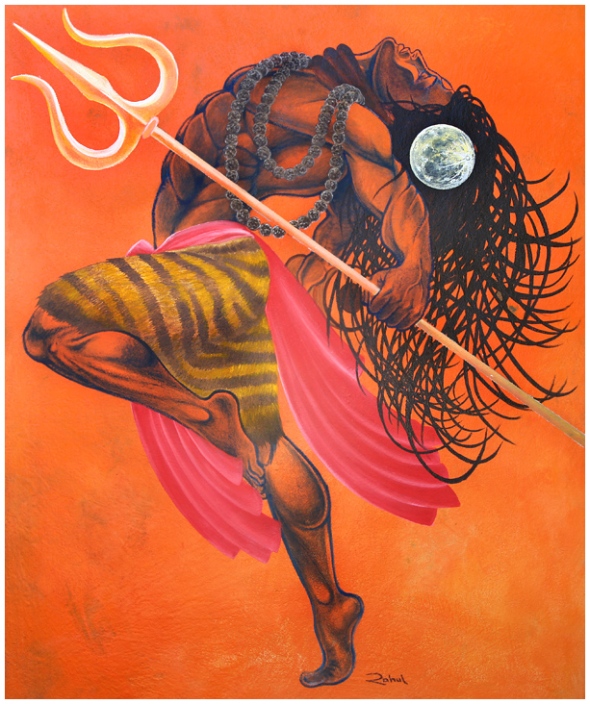
The Shiva Tandava -as the destroyer of the universe.

     ShivaA Tandav
Lord Shiva is also known as Nataraj, the Dancing God. This divine art form is performed by Lord Shiva and his divine consort Goddess Parvati. The dance performed by Lord Shiva is known as Tandava. Shiva’s Tandava is a vigorous dance that is the source of the cycle of creation, preservation and dissolution. Tandava depicts his violent nature as the destroyer of the universe.

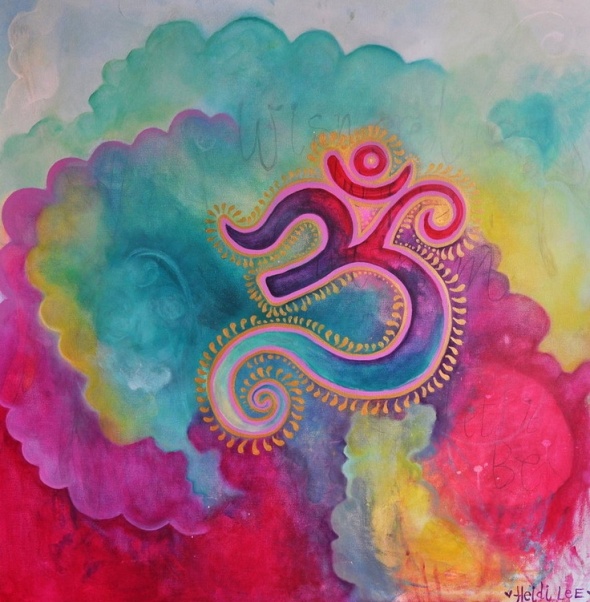
Om Namah Shivaya

sadhvi
    Aum
Om or Aum is the pranava or seed mantra of all mantras. The two syllables na- and mah- can be translated as “I humbly bow to you”. The three syllables shi-vaa-ya invoke Lord Shiva and all his energies to bless us and lead us to the highest state of peace and meditation. The mantra should ideally be chanted twice a day (morning and evening) for 108 times each. The two words, namah and shivaya, are also referred to as the panchakshara (five letter) chant. It is said that those who chant these five holy letters while meditating on Lord Shiva will be blessed by visions of Shiva – the Lord of the yogis.

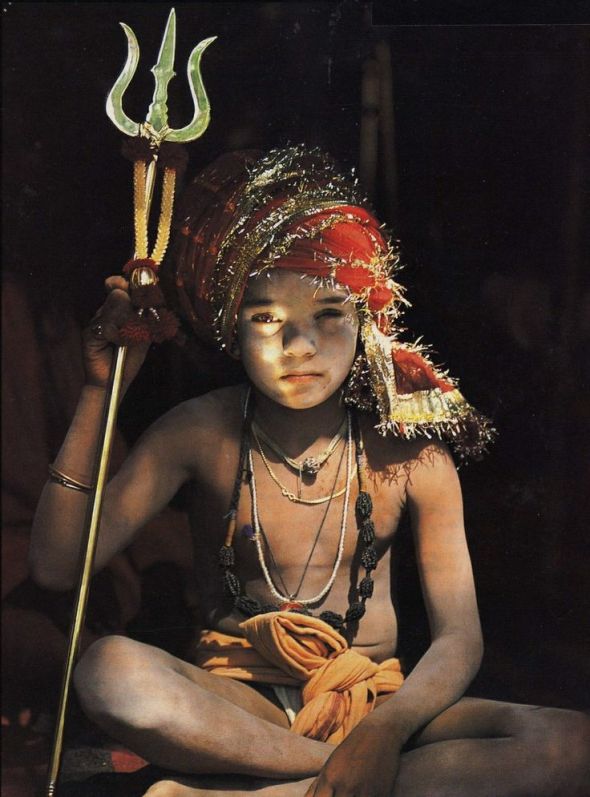
Statue of God – The sadhu

     bal sadhu
India is the Land of Gods, and we see and serve to god in the form of sadhu….
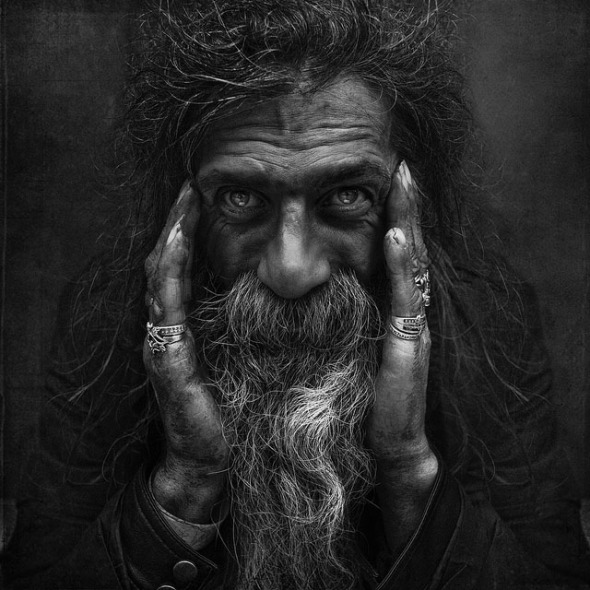
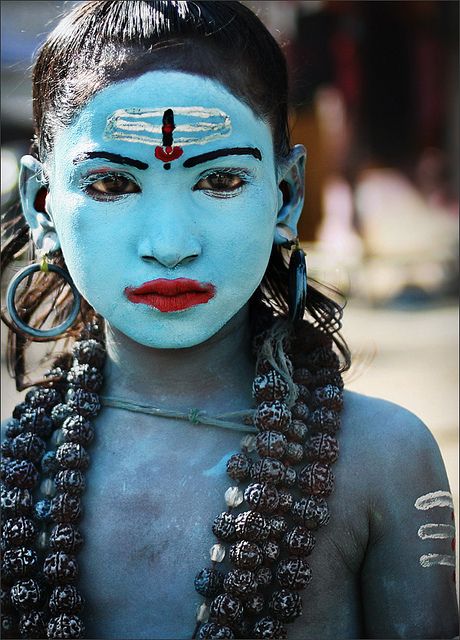
The Sadhu usually wears on his forehead the three lines of the god’s trident drawn in ash or sandalwood paste which may be vertical or horizontal. Endless variations of these sectarian marks, depending on the sect, are possible. They may decorate their bodies with various lines and markings, cover the entire torso with ashes, carry a metal trident and wear rosaries. The hair and the beard are uncut and matted.The Sadhu is credited with much of the development of Indian culture, art, architecture, music, poetry and literature, influencing and forming the very world he has abandoned with his endless travels from one sacred site to another, singing songs and reciting poetry and carrying icons, paintings and other sanctified objects.

lord of the cremation – Shiva

                          shiva
Shiva, the third god of the Hindu triadition, has three eyes, the third one (between the eyebrows) being usually closed, except at the time of destruction of things. He wears long hair, supports the holy Ganga river on his head and the crescent moon on his matted hair. He has two to four arms, holds a trident in his hand, is naked except for a tiger-skin, besmears himself with ash and is decorated with snakes on his head, neck and arms. He is very fair-coloured but has a blue throat due to his having drunk poison during the time of the churning of the ocean by the gods. In his other hands he holds an axe, an antelope, and an hour-glass shaped drum called a ‘damru’. He wears a garland of skulls and is also known as the lord of the cremation grounds. His consort is Parvati and he is the father of Ganesha and Skanda (Kartikeya). His vehicle is the bull called Nandi.