Are you looking for Inspired writer, Contact author vikas acharya - +91-9911275074 Email: theacharyaa@gmail.com

Showing posts with label Temple. Show all posts

Monday, 9 February 2015

Kalia Masan -The most dangerous black magic


Kalia Masan is the most dangerous type of black magic, it uses the power of disturbed souls on the lower astral plane who are suffering and wandering without any direction to elevate them and live as parasites on the people dwelling on earth. Its energy is strangely fascinating and hypnotic; its methods are seductive, intimidating and ruthless.
Ash of the Dead or Kalia Masan is black magic that causes death in 40 days, after the victim eats food contaminated with ashes of a dead person.
masan is that type of magic which is cast upon kids. In this type of magic, the ash left from the burnt hindu dead bodies is put in some food and gave to the victim.

Thursday, 5 February 2015

Kalpeshwar – Hindu temple dedicated to Lord Shiva


Kalpeshwar is a Hindu temple dedicated to Lord Shiva located at an elevation of 2,200 m in the picturesque Urgam valley in the Garhwal region of Uttarakhand state in India.Thistree is believed to fulfill all the wishes of a person. There is a cave temple situated at height of 2134 mtr and Shiva is worshiped here in his matted hair form. Kalpeshwar is surrounded by dense woods and also terraced fields that lie in the Urgam valley.
It is the fifth temple of the Panch Kedars (five temples of Lord Shiva) and is the only temple out of five that is accessible throughout the year.At Kalpeshwarm, the matted hair or Jata of lord Shiva are the object of worship and because of this, Lord Shiva, is also called Jatadhari and Jateshwar.

Gangotri – The source of River Ganga


Gangotri is the source of Ganga as Bhagirathi river.
Gangotri
Location :  Uttar Pradesh 
Altitude :  3042 mts. 
Climate :  Summer – Cool during the day and cold at night.
Winter – Snow-bound. Touching sub-zero 
Best Season :  April to November
Gangotri is at an altitude of 3048 meters above sea level. It is on the northernmost part of the state of Uttar Pradesh and is very near the Indo-Tibetan border. It is approximately 300 km from Dehradun, 250 km from Rishikesh and 105 km from Uttarkashi. The summers are relatively cool and winters are freezing cold, with rains in the months of May and June. For the devotees and tourists, the gates of the temple are open only in the months of May to November.

Monday, 22 December 2014

The YAGYA – means sacrifice, prayer


Yagya involves the application of specific prescribed sounds (Mantras), extracted from the Vedas, through recitation on a fine level of awareness by trained Vedic experts to achieve a specific effect: for example, to eliminate obstacles or defuse impending dangers, or to promote health, financial success—even world peace.

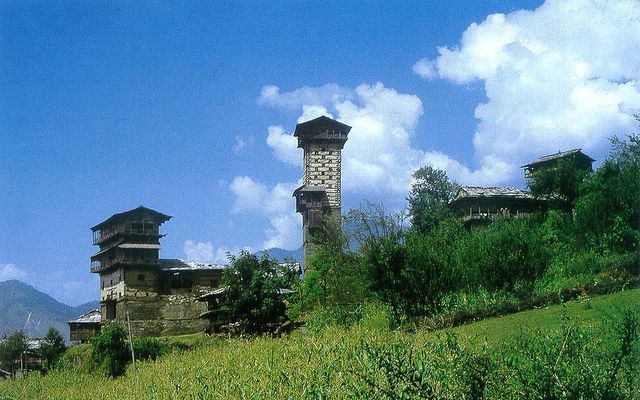
The Great Tower Temples of Kullu Valley, Himachal Pradesh, India


The Great Tower Temples of Kullu Valley, Himachal Pradesh, India are dedicated to “Shringa Rishi” who is the chief deity of Banjar valley, Kullu District, Himchal Pradesh. The temple of Shringa Rishi is situated at village Bagi.This tower temple of Chaini is the tallest standing structure of its kind in the entire Western Himalayas.This tower survived the devastating 1905 Kangra earthquake. It is believed that this temple was built around the 17th Century by a local King Dhadhu and that’s why this temple is locally known as Dhadhiya Kothi as well. The tower temple stands on a plinth, which is almost 15 meters deep, and is made of locally available stone and deodar wood.

Wednesday, 17 December 2014

The vashisht temple

vashisht-temple-big

This village lies at a distance of 6 km from Manali, on the banks of the Ravi River. The natural Hot springs found in this village are believed to have medicinal properties capable of curing any skin ailment. According to the Hindu mythology, the hot sulphur springs in Vashisht were formed by the younger brother of the deity Rama, Lakshman.Pilgrimage sites dedicated to Kala Guru and the 7th incarnation of Hindu deity Vishnu, Rama, are also located in the Vashisht Village.

vashisht-village-holyman

The Champavati Temple


The Champavati Temple, located in the heart of the city of Chamba, is a pilgrim destination for many Hindus. It is named after Champavati, the daughter of King Sahil Varman, the founder of the temple. The temple holds great historical and religious relevance for many Hindus. Champavati Temple enshrines an idol of Goddess Mahisasuramardini, the avatar of Goddess Durga. According to the legend, the daughter of King Sahil Varman Champavati was a religious person and used to visit temples and sadhu’s ashrams regularly.

The Renukaji temple

parashuram-temples-renuka


The Renuka Lake or Temple (672 m) is regarded as the embodiment of Renukaji, the wife of the sage Jamadagini and the mother of Parshurama – one of the ten `Avatars` of Lord Vishnu. Shaped like the profile of a woman, the lake has the circumference of 2.5 km and is the largest in Himachal.

Aghori – The Epic Souls

      Aghori
To be really aware you must be able to know simultaneously what is going on thousands of miles away today, what may have happened centuries ago, what will happen anywhere in the world decades from now, and what is occurring, has occurred, or will occur on other planes of existence. And you must still act as if you know nothing. You must just sit and talk with other people and play the part which Nature has assigned to you.

True love is selfless

True love is selfless

True love is selfless. It is prepared to sacrifice “Sadhu Vaswani”

Tuesday, 16 December 2014

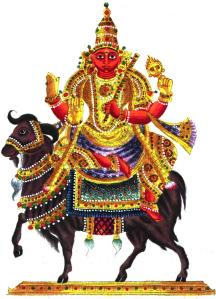
ॐ अंग अंगारकाय नमः

           Angraka_grahaPBAAH115.350210731_std
ॐ अंग अंगारकाय नमः
In Vedic astrology Mangala is considered a malefic of the first order. He rules over the signs Mesha (Aries) and Vrishchika (Scorpio), is exalted in Makara (Capricorn) and has his fall in Karka (Cancer). The Sun, Moon and Jupiter are all considered friendly to him, while he is hostile to Mercury. Venus and Saturn are neutral. Mangala represents drive and physical energy, self-confidence and ego, strength, anger, impulsiveness, heroism and adventurous nature. Mangala rules over blood, muscles and bone marrow. He is associated with battle, war and soldiers.
Rinmochan Mangal Stotram: this stotra is very helpful for gaining repayment power for loan.  If you are under heavy debt and you are failing control the situation, you may start reciting Rinmochan Mangal Stotram, great relief and help will come.

Om chanting Aum

baba
Om is the main sound, from which all other sounds are produced, even the sound of mother. There is a lot of significance of chanting Om, which you will get to realize within a few days of chanting. It will have a major impact on your day to day life. When you start reciting Om, you will feel its power. Well, in this article, we will provide you with information on the power of Aum, so read on.When you take a deep breath and chant Om, it causes a very calmful effect, which will totally relax your mind and body. It is the first stage of meditation, which aims at drawing your attention away from all other tensions that have occupied your mind. The sound of Om is very pleasant to hear. When accompanied by slow deep breathing, it gives a very gentle massage to your chest, spine, tummy and head. Om chanting improves the functioning of all organs of the body and thus, helps in curing various diseases. It helps to improve your concentration power, thereby enabling you to grasp more information. Om chanting is like an orientation to the spiritual practices. When your mind is away from all the worldly thoughts, it is the stage when you get truly connected to the almighty God. It infuses vitality in the body and one tends to feel stronger.

Application of Tilak

tilak

There are different types of Tilak, each differing in its significance. Tilak is worn on the Ajna Chakra, the centre of forehead, on the space between the eyebrows. Tilak is applied on the point at which the third eye or the spiritual eye is believed to open. All the actions of humans are governed by this specific point. Application of tilak is customary and infact, most of the Hindu ceremonies begin with the application of tilak. Well, Tilak can be made by using sandal paste, turmeric, kumkum or ashes. Depending on the purpose for which Tilak is applied, the material is chosen for preparing the sacred forehead mark.

Monday, 15 December 2014

Teej – The festival of swings


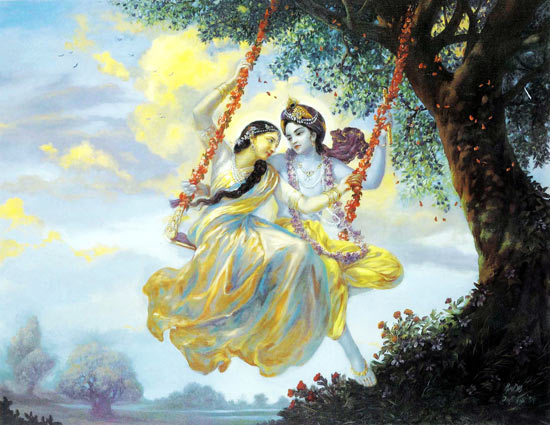
On the occasion of Teej, Goddess Parvati is worshiped by seekers for martial bliss and happiness. Teej is also referred as the festival of swings.Teej is held every year during the Hindu Month of Shravan (July or August) and marks the advent of monsoons. When the monsoon rains fall on parched land, the pleasing scent of wet soil rises into the air and spirits soar high in celebration. Song & dance mark the gaiety of the Teej festival. Women’s observe this festival by fasting and praying to Lord Shiva and Goddess Parvati for a happy married life.

The Radha-Krishna – love legend of all times

                 
radha-krishna

radha krishna

The Radha-Krishna amour is a love legend of all times. It’s indeed hard to miss the many legends and paintings illustrating Krishna’s love affairs, of which the Radha-Krishna affair is the most memorable. Krishna’s relationship with Radha, his favorite among the ‘gopis’ (cow-herding maidens), has served as a model for male and female love in a variety of art forms, and since the sixteenth century appears prominently as a motif in North Indian paintings. The allegorical love of Radha has found expression in some great Bengali poetical works of Govinda Das, Chaitanya Mahaprabhu, and Jayadeva the author of Geet Govinda.Radha, daughter of Vrishabhanu, was the mistress of Krishna during that period of his life when he lived among the cowherds of Vrindavan. Since childhood they were close to each other – they played, they danced, they fought, they grew up together and wanted to be together forever, but the world pulled them apart. He departed to safeguard the virtues of truth, and she waited for him. He vanquished his enemies, became the king, and came to be worshipped as a lord of the universe. She waited for him. He married Rukmini and Satyabhama, raised a family, fought the great war of Ayodhya, and she still waited. So great was Radha’s love for Krishna that even today her name is uttered whenever Krishna is refered to, and Krishna worship is though to be incomplete without the deification of Radha.

Dharma shastras

sadhu
Hinduism developed a doctrine that life has different goals according to a person’s stage of life and position. These goals became codified in the ‘goals of a person’ or ‘human goals’, the purusharthas, especially in sacred texts about dharma called ‘dharma shastras’ of which the ‘Laws of Manu’ is the most famous. In these texts three goals of life are expressed, namely virtuous living or dharma, profit or worldly success, and pleasure, especially sexual pleasure as a married householder and more broadly aesthetic pleasure. 

Sunday, 14 December 2014

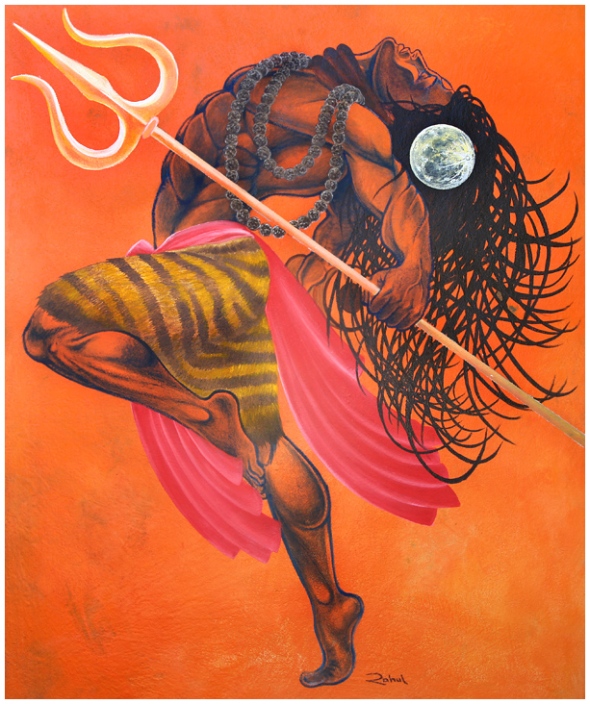
The Shiva Tandava -as the destroyer of the universe.

     ShivaA Tandav
Lord Shiva is also known as Nataraj, the Dancing God. This divine art form is performed by Lord Shiva and his divine consort Goddess Parvati. The dance performed by Lord Shiva is known as Tandava. Shiva’s Tandava is a vigorous dance that is the source of the cycle of creation, preservation and dissolution. Tandava depicts his violent nature as the destroyer of the universe.

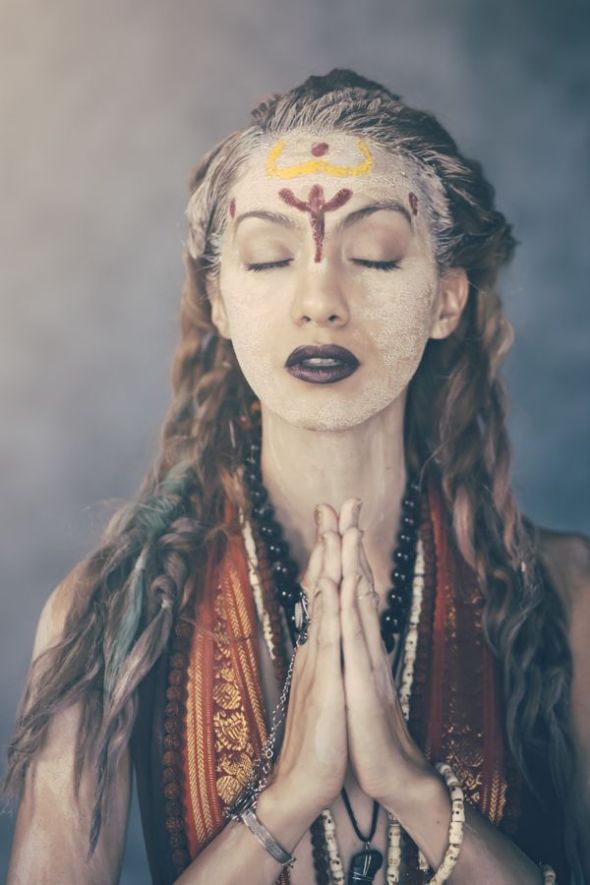
Om Namah Shivaya

sadhvi
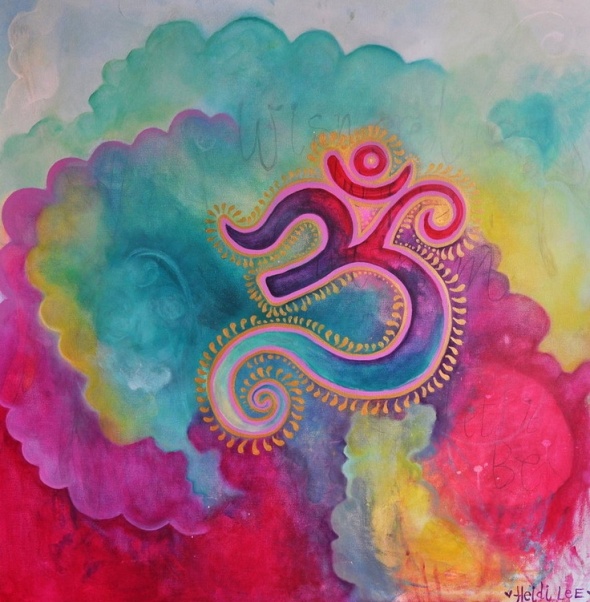
    Aum
Om or Aum is the pranava or seed mantra of all mantras. The two syllables na- and mah- can be translated as “I humbly bow to you”. The three syllables shi-vaa-ya invoke Lord Shiva and all his energies to bless us and lead us to the highest state of peace and meditation. The mantra should ideally be chanted twice a day (morning and evening) for 108 times each. The two words, namah and shivaya, are also referred to as the panchakshara (five letter) chant. It is said that those who chant these five holy letters while meditating on Lord Shiva will be blessed by visions of Shiva – the Lord of the yogis.

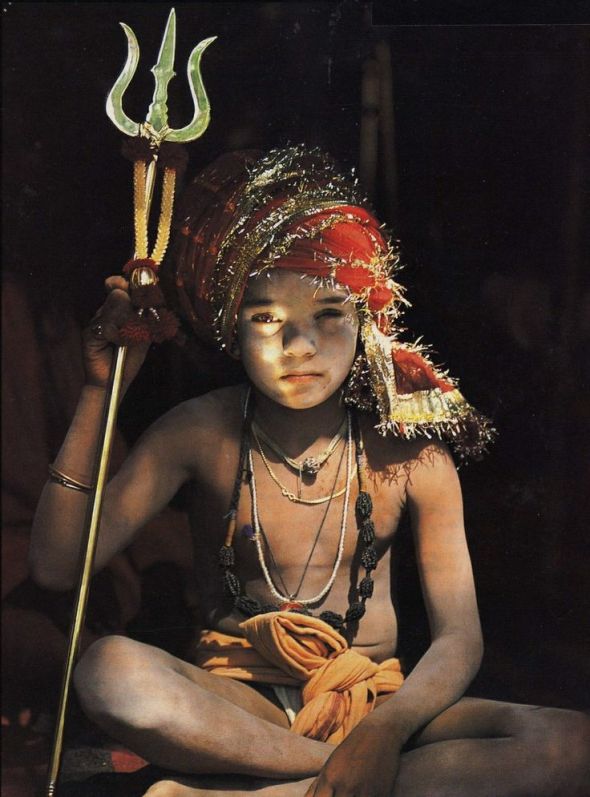
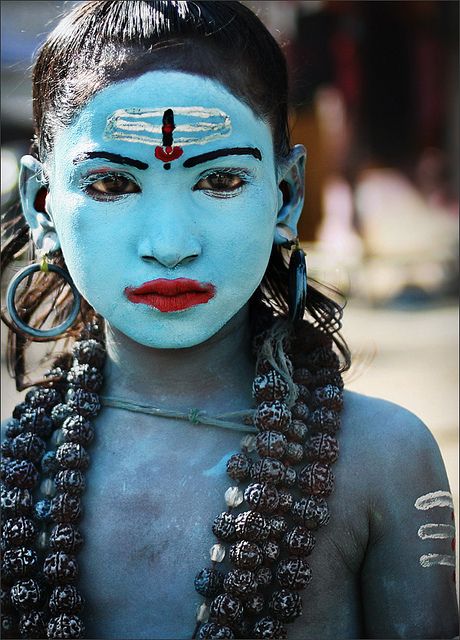
Statue of God – The sadhu

     bal sadhu
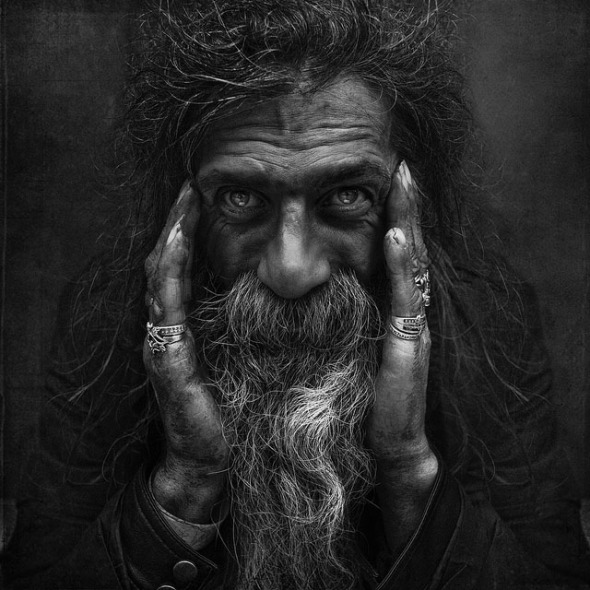
India is the Land of Gods, and we see and serve to god in the form of sadhu….
The Sadhu usually wears on his forehead the three lines of the god’s trident drawn in ash or sandalwood paste which may be vertical or horizontal. Endless variations of these sectarian marks, depending on the sect, are possible. They may decorate their bodies with various lines and markings, cover the entire torso with ashes, carry a metal trident and wear rosaries. The hair and the beard are uncut and matted.The Sadhu is credited with much of the development of Indian culture, art, architecture, music, poetry and literature, influencing and forming the very world he has abandoned with his endless travels from one sacred site to another, singing songs and reciting poetry and carrying icons, paintings and other sanctified objects.

lord of the cremation – Shiva

                          shiva
Shiva, the third god of the Hindu triadition, has three eyes, the third one (between the eyebrows) being usually closed, except at the time of destruction of things. He wears long hair, supports the holy Ganga river on his head and the crescent moon on his matted hair. He has two to four arms, holds a trident in his hand, is naked except for a tiger-skin, besmears himself with ash and is decorated with snakes on his head, neck and arms. He is very fair-coloured but has a blue throat due to his having drunk poison during the time of the churning of the ocean by the gods. In his other hands he holds an axe, an antelope, and an hour-glass shaped drum called a ‘damru’. He wears a garland of skulls and is also known as the lord of the cremation grounds. His consort is Parvati and he is the father of Ganesha and Skanda (Kartikeya). His vehicle is the bull called Nandi.