Are you looking for Inspired writer, Contact author vikas acharya - +91-9911275074 Email: theacharyaa@gmail.com

Showing posts with label Sadhu. Show all posts

Saturday, 2 May 2015

An Indian Man Hasn’t Eaten or drunk for 70 years

Do you know An Indian man claims he hasn't eaten or drunk for 70 years. After many tests, doctors still don’t know how it’s possible.

AgeBack

Thursday, 15 January 2015

Sanjeevani Booti – The only magical Plant (Booti) curing any woe


Sanjeevi is the name of the mountain with auspicious and medicinal plants on it. In Hinduism this mountain is said to be very sacred. Lord Hanuman brought this mountain with the medicinal plants from Dronagiri to cure Lakshman who had fainted in the war. It is mentioned in Ramayana that during the war between Rama and Ravana, Inderjit sent a powerful weapon towards Lakshmana. He was badly wounded and fell unconscious. Ayurvedic Physicians found that the wound had done deep enough to kill him. Hanuman was called to fetch Sanjeevani Booti from the Mount Sumeru in the Himalayas. Upon reaching the mountain, Hanuman failed to identify the magical herb and carried the entire mountain to the battlefield. Within a few minutes of smelling this life saving medicinal herb , Lakshmana gained consciousness and vigor to fight in the war. According to Hindu mythology, the herb called Sanjeevani Booti is capable of curing any woe irrespective of its type and origin.

Monday, 22 December 2014

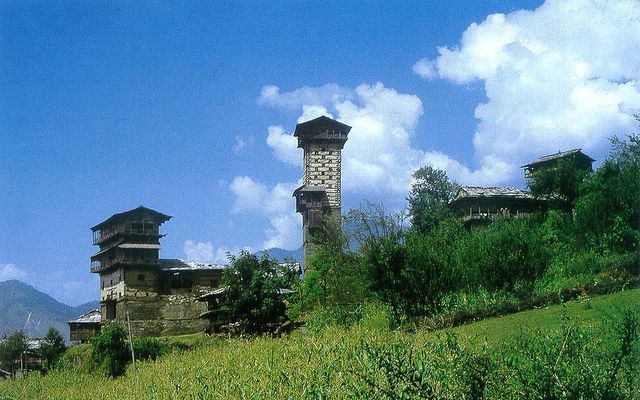
The Great Tower Temples of Kullu Valley, Himachal Pradesh, India


The Great Tower Temples of Kullu Valley, Himachal Pradesh, India are dedicated to “Shringa Rishi” who is the chief deity of Banjar valley, Kullu District, Himchal Pradesh. The temple of Shringa Rishi is situated at village Bagi.This tower temple of Chaini is the tallest standing structure of its kind in the entire Western Himalayas.This tower survived the devastating 1905 Kangra earthquake. It is believed that this temple was built around the 17th Century by a local King Dhadhu and that’s why this temple is locally known as Dhadhiya Kothi as well. The tower temple stands on a plinth, which is almost 15 meters deep, and is made of locally available stone and deodar wood.

Wednesday, 17 December 2014

The Samadhi

The world and ourselves are co-related and bound together, until we set ourselves free from all relativity in the world of unique reality – the eternal illimitable Samadhi.

The world and ourselves are co-related and bound together, until we set ourselves free from all relativity in the world of unique reality – the eternal illimitable Samadhi

Followers of God – The Sadhu Life

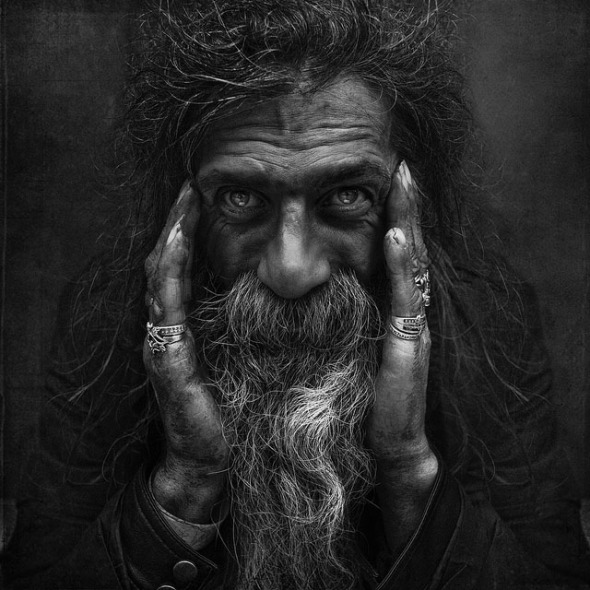
sadhu and swami, sadhu also spelled sadhu,  in India, a religious ascetic or holy person. The class of sadhus includes renunciation of many types and faiths.

sadhu and swami, sadhu also spelled sadhu, in India, a religious ascetic or holy person. The class of sadhus includes renunciation of many types and faiths.

Aghori – The Epic Souls

      Aghori
To be really aware you must be able to know simultaneously what is going on thousands of miles away today, what may have happened centuries ago, what will happen anywhere in the world decades from now, and what is occurring, has occurred, or will occur on other planes of existence. And you must still act as if you know nothing. You must just sit and talk with other people and play the part which Nature has assigned to you.

True love is selfless

True love is selfless

True love is selfless. It is prepared to sacrifice “Sadhu Vaswani”

The search of Secret India

The true Self will not be discovered, but it will transform you utterly in that Self.
The true Self will not be discovered, but it will transform you utterly in that Self
The mind, devoid of its passions, becomes like a well-tamed animal, obedient, useful, more productive and more exact.

Tuesday, 16 December 2014

The Sanyasi

            sanyasi
The renowned Vedic scholar, Rajbali Pandey, in his outstanding work, Socio-Religious Study of the Hindu Sacraments”, while discussing the funeral Samskaras of the ascetics, makes a significant remark, “But after the transition of Hinduism from Vedism or Brahmanism to Puranism and Tantraism, Sanyasa came to be regarded as Kalivarjya. Though Shankaracharya broke this prohibition by his example, Sanyasa never became popular in Hinduism again. The modern Sadhus belong to different sects, following Jnaanamaarga or Bhaktimaarga, and they cannot be properly called Sanyasins.”

MahaKumbh Mela – opportunity to purify our soul by bathing in holy river and serving saints.

sadhu
For twelve days and twelve nights (equivalent to twelve human years) the gods and demons fought in the sky for possession of this pot of Amrita. From this nectar some drops spills at Allahabad, Haridwar, Ujjain and Nashik while they were fighting for nectar . So on earth we celebrate this festival to get the pious credits and meet the purpose of life that is going to back to godhead  our eternal home where our father is waiting for us. This is opportunity we get after associating with saints or holy man who follow scriptures.
Kumbh mela provides us this great opportunity to purify our soul by bathing in holy river and serving saints.

Sadhana – Spiritual Evolution

               SADHU

For those who want to seriously practice kriyas, it is time to formulate a specific sadhana. Sadhana means “endeavoring to obtain a particular result.” The result kriyabans seek is accelerated spiritual evolution. Sadhana becomes a powerful method to achieve this result. There are three important aspects of sadhana: choice, commitment and aspiration. The first stage of sadhana is to choose a practice. Even the most simple sadhana will be challenging to the newcomer. Consider the sadhana of lighting a candle every night, then immediately blowing it out. Nothing more or nothing less. Do this for ninety days. You will observe the mind coming up with every reason why you shouldn’t do it and every excuse why you missed a few (or many) nights. Yet by accepting it as a sadhana, you make a choice to do it and it becomes a spiritual practice.

Application of Tilak

tilak

There are different types of Tilak, each differing in its significance. Tilak is worn on the Ajna Chakra, the centre of forehead, on the space between the eyebrows. Tilak is applied on the point at which the third eye or the spiritual eye is believed to open. All the actions of humans are governed by this specific point. Application of tilak is customary and infact, most of the Hindu ceremonies begin with the application of tilak. Well, Tilak can be made by using sandal paste, turmeric, kumkum or ashes. Depending on the purpose for which Tilak is applied, the material is chosen for preparing the sacred forehead mark.

Indian scriptures

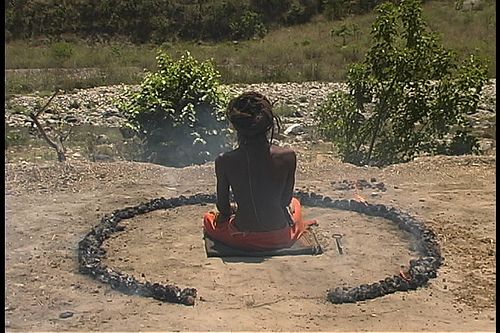
sadhu tap
Hinduism has its origins in such remote past that it cannot be traced to any one individual. Some scholars believe that Hinduism must have existed even in circa 10000 B.C. and that the earliest of the Hindu scriptures – The Rig Veda – was composed well before 6500 B.C. The word “Hinduism” is not to be found anywhere in the scriptures, and the term “Hindu” was introduced by foreigners who referred to people living across the River Indus or Sindhu, in the north of India, around which the Vedic religion is believed to have originated.

Monday, 15 December 2014

Dharma shastras

sadhu
Hinduism developed a doctrine that life has different goals according to a person’s stage of life and position. These goals became codified in the ‘goals of a person’ or ‘human goals’, the purusharthas, especially in sacred texts about dharma called ‘dharma shastras’ of which the ‘Laws of Manu’ is the most famous. In these texts three goals of life are expressed, namely virtuous living or dharma, profit or worldly success, and pleasure, especially sexual pleasure as a married householder and more broadly aesthetic pleasure. 

Sunday, 14 December 2014

The Shiva Linga

Lingam
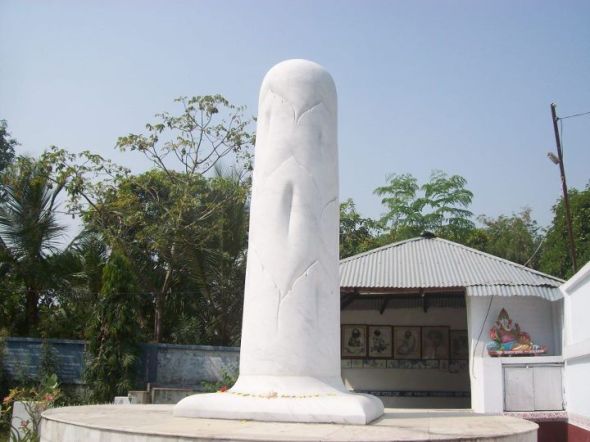
The legend of Shiva Linga or Lingodbhavamurthy is deeply related to Mahashivaratri. The legend narrates the story of vain search by Brahma and Vishnu to discover the Aadi (beginning) and the Antha (end) of Lord Shiva. The legend thus proves the supremacy of Lord Mahadeva over other Hindu Gods and explains why the lingam is believed to be one of the most potent emblems in Hindu ideals. The story is stated in the three of the puranas – the Kurma Purana, the Vayu Purana and Shiva Purana
Shiva_Lingam
According to Puranas, once the other two of the triads of Hindu Gods, Brahma and Vishnu were fighting over each other’s prowess. Horrified at the intensity of the battle, the other gods asked Shiva to intervene. To make them realize the futility of their fight, Lord Shiva assumed the form of a flaming Linga in between Brahma and Vishnu and challenged both of them by asking them to measure the gigantic Linga (phallic symbol of Lord Shiva). Awestruck by its magnitude, Brahma and Vishnu decided to find one end each to establish supremacy over the other. Lord Brahma took the form of a swan and went upwards while Lord Vishnu assumed the form of Varaha – a boar and went into the earth towards nether land. Both searched for thousands of miles but neither could find the end.
Shivling

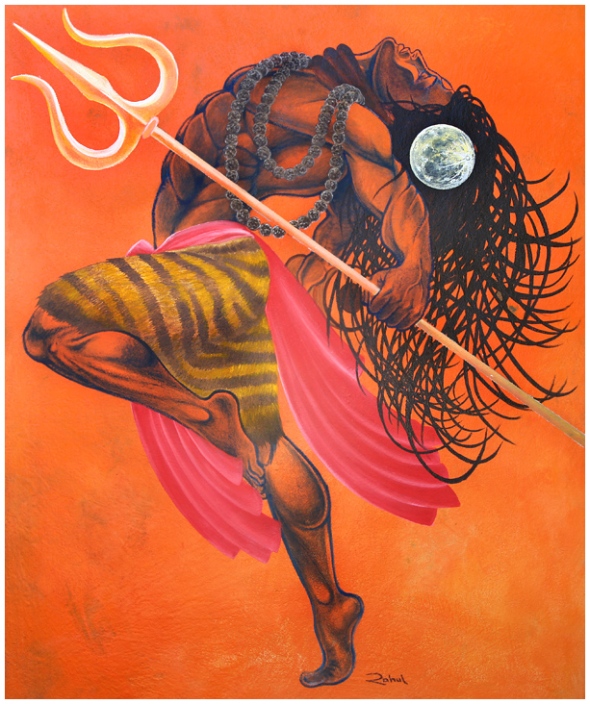
The Shiva Tandava -as the destroyer of the universe.

     ShivaA Tandav
Lord Shiva is also known as Nataraj, the Dancing God. This divine art form is performed by Lord Shiva and his divine consort Goddess Parvati. The dance performed by Lord Shiva is known as Tandava. Shiva’s Tandava is a vigorous dance that is the source of the cycle of creation, preservation and dissolution. Tandava depicts his violent nature as the destroyer of the universe.

Om Namah Shivaya

sadhvi
    Aum
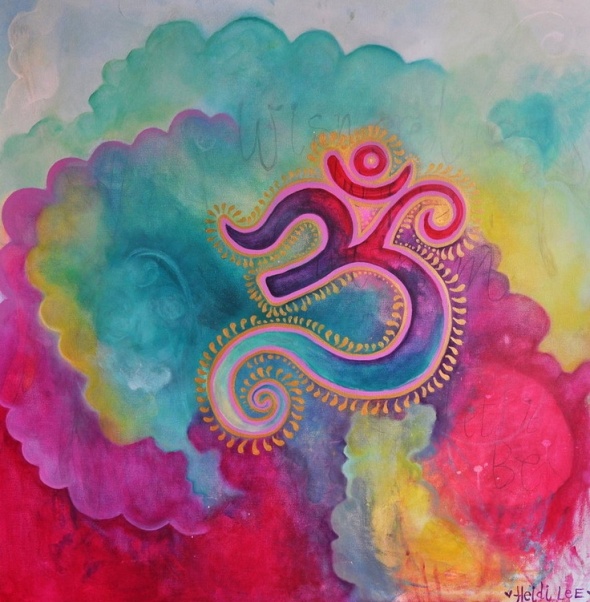
Om or Aum is the pranava or seed mantra of all mantras. The two syllables na- and mah- can be translated as “I humbly bow to you”. The three syllables shi-vaa-ya invoke Lord Shiva and all his energies to bless us and lead us to the highest state of peace and meditation. The mantra should ideally be chanted twice a day (morning and evening) for 108 times each. The two words, namah and shivaya, are also referred to as the panchakshara (five letter) chant. It is said that those who chant these five holy letters while meditating on Lord Shiva will be blessed by visions of Shiva – the Lord of the yogis.

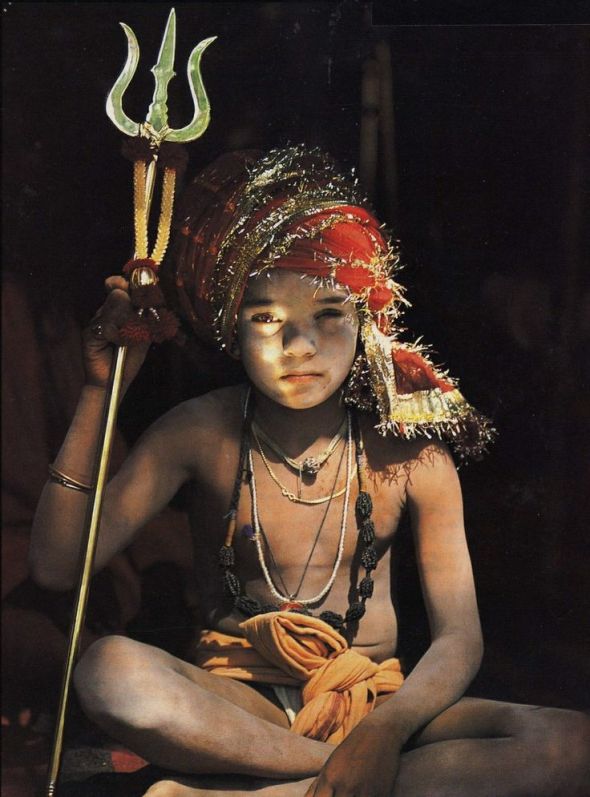
Statue of God – The sadhu

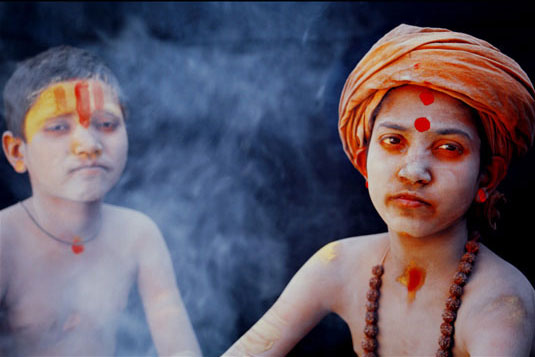
     bal sadhu
India is the Land of Gods, and we see and serve to god in the form of sadhu….
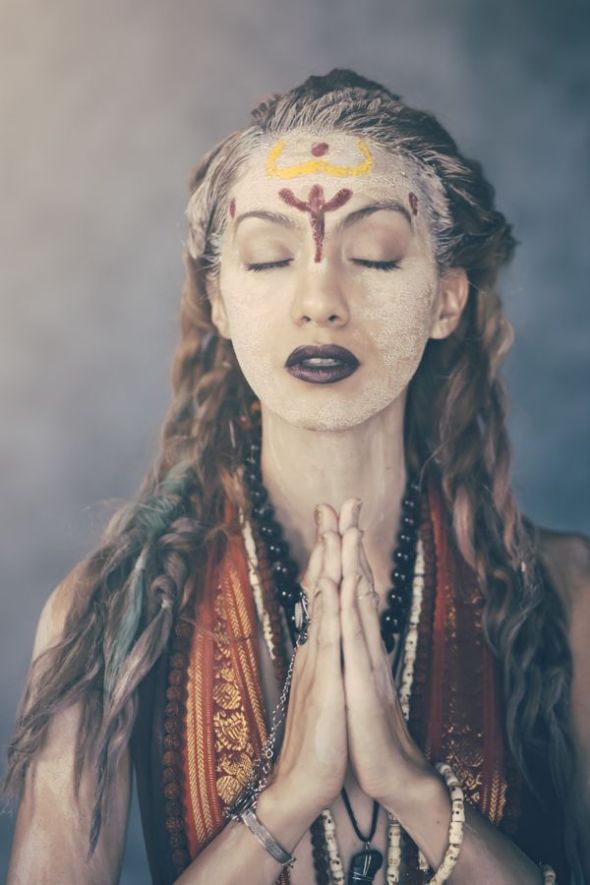
The Sadhu usually wears on his forehead the three lines of the god’s trident drawn in ash or sandalwood paste which may be vertical or horizontal. Endless variations of these sectarian marks, depending on the sect, are possible. They may decorate their bodies with various lines and markings, cover the entire torso with ashes, carry a metal trident and wear rosaries. The hair and the beard are uncut and matted.The Sadhu is credited with much of the development of Indian culture, art, architecture, music, poetry and literature, influencing and forming the very world he has abandoned with his endless travels from one sacred site to another, singing songs and reciting poetry and carrying icons, paintings and other sanctified objects.