Are you looking for Inspired writer, Contact author vikas acharya - +91-9911275074 Email: theacharyaa@gmail.com

Showing posts with label Mantra. Show all posts

Friday, 8 May 2015

Mritasanjeevani - an herb which cures one of all diseases.

मंत्र
ॐ ओं जों सः ओं  भूर्भुवः स्वाहा |
ॐ  त्रियम्बकं यजामहे सुगन्धिं पुष्टिवर्धनं उर्वारुकमिव बन्धनान् मृत्योर्मोक्षिय मामृतात्.|
हों ओं जू सः ओं भूर्भुवः स्वाहा l

Mantra in English:
Om Aom Jom Sah Aom Bhurbuva Swaha |
Om Trayambakam Yajamahe Sugandhim Pushtivardhanam Urva Rukamiva Bandhanaan Mrityor Mokshiye Maamritat.|
Hom Aom Joom Sah Aom Bhurbuva Swaha |

India Myths


Wednesday, 6 May 2015

ॐ भूर्भुवः स्वः

 ॐ भूर्भुवः स्वः तत्सवितुर्वरेण्यम्
           भर्गो देवस्य धीमहि धियो यो नः प्रचोदयात् ॥ ॥

India Myths

Monday, 22 December 2014

The YAGYA – means sacrifice, prayer


Yagya involves the application of specific prescribed sounds (Mantras), extracted from the Vedas, through recitation on a fine level of awareness by trained Vedic experts to achieve a specific effect: for example, to eliminate obstacles or defuse impending dangers, or to promote health, financial success—even world peace.

Wednesday, 17 December 2014

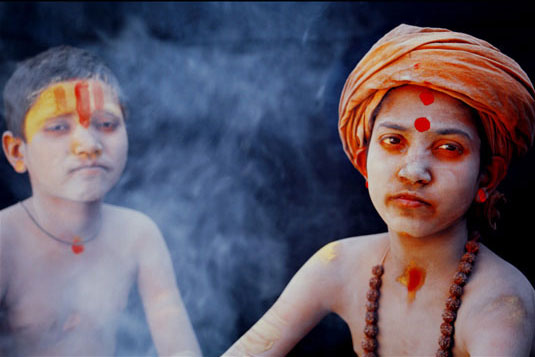
Followers of God – The Sadhu Life

sadhu and swami, sadhu also spelled sadhu,  in India, a religious ascetic or holy person. The class of sadhus includes renunciation of many types and faiths.

sadhu and swami, sadhu also spelled sadhu, in India, a religious ascetic or holy person. The class of sadhus includes renunciation of many types and faiths.

Tuesday, 16 December 2014

The Sanyasi

            sanyasi
The renowned Vedic scholar, Rajbali Pandey, in his outstanding work, Socio-Religious Study of the Hindu Sacraments”, while discussing the funeral Samskaras of the ascetics, makes a significant remark, “But after the transition of Hinduism from Vedism or Brahmanism to Puranism and Tantraism, Sanyasa came to be regarded as Kalivarjya. Though Shankaracharya broke this prohibition by his example, Sanyasa never became popular in Hinduism again. The modern Sadhus belong to different sects, following Jnaanamaarga or Bhaktimaarga, and they cannot be properly called Sanyasins.”

Soul Practice – The Yoga or Yogi Life’s

naga

In the Classical Sanskrit of the Puranas, the word yogi  originally referred specifically to a male practitioner of yoga. In the same literature yoginī is the term used for female practitioners as well as for divine goddesses and enlightened mothers, all revered as aspects of the Divine Mother Devi without whom there would be no yogis. The two terms are still used with those meanings today, but the word yogi is also used generically to refer to both male and female practitioners of yoga and related meditative practices in Buddhism, Jainism.

Pure Heart & Delight soul

SADHU

The man who is pure of heart Is bound to fulfill himself In whatever way he is taught. A worldly man seeks all his life, But is still bewildered. Detached from the senses, You are free. Attached, you are bound. When this is understood, You may live as you please.
Astavakra Gita

Om chanting Aum

baba
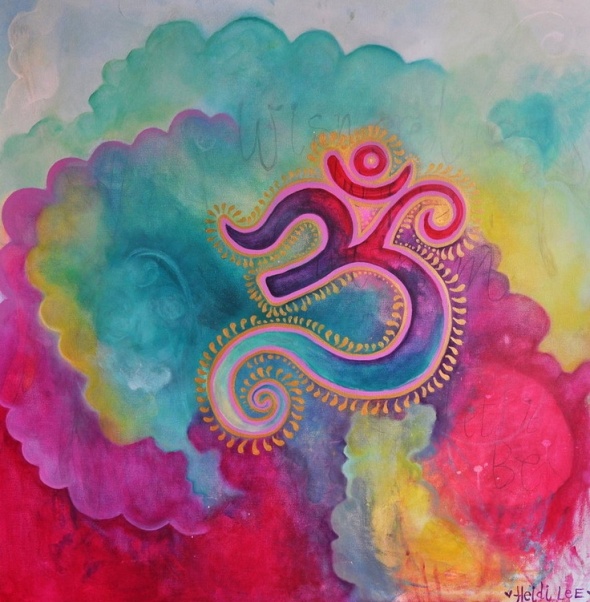
Om is the main sound, from which all other sounds are produced, even the sound of mother. There is a lot of significance of chanting Om, which you will get to realize within a few days of chanting. It will have a major impact on your day to day life. When you start reciting Om, you will feel its power. Well, in this article, we will provide you with information on the power of Aum, so read on.When you take a deep breath and chant Om, it causes a very calmful effect, which will totally relax your mind and body. It is the first stage of meditation, which aims at drawing your attention away from all other tensions that have occupied your mind. The sound of Om is very pleasant to hear. When accompanied by slow deep breathing, it gives a very gentle massage to your chest, spine, tummy and head. Om chanting improves the functioning of all organs of the body and thus, helps in curing various diseases. It helps to improve your concentration power, thereby enabling you to grasp more information. Om chanting is like an orientation to the spiritual practices. When your mind is away from all the worldly thoughts, it is the stage when you get truly connected to the almighty God. It infuses vitality in the body and one tends to feel stronger.

Monday, 15 December 2014

Classical Hinduism

sadhu

An important idea that developed in classical Hinduism is that dharma refers especially to a person’s responsibility regarding class (varna) and stage of life (ashrama). This is called varnashrama-dharma. In Hindu history the highest class, the Brahmins, adhered to this doctrine. The class system is a model or ideal of social order that first occurs in the oldest Hindu text, the Rig Veda and the present-day caste (jati) system may be rooted in this.

Dharma shastras

sadhu
Hinduism developed a doctrine that life has different goals according to a person’s stage of life and position. These goals became codified in the ‘goals of a person’ or ‘human goals’, the purusharthas, especially in sacred texts about dharma called ‘dharma shastras’ of which the ‘Laws of Manu’ is the most famous. In these texts three goals of life are expressed, namely virtuous living or dharma, profit or worldly success, and pleasure, especially sexual pleasure as a married householder and more broadly aesthetic pleasure. 

Sunday, 14 December 2014

The Mantras,Shlokas & Stotras

sadhu

“Mantras” derived from the Sanskrit ‘man’, meaning ‘to think’. Mantra literally means ‘instrument of thought’.  Mantras are hymns, which are believed to benefit that chants them. Vedic mantras are said to have been divinely ‘heard’ (shruti) by ancient sages. These hymns are mostly invocations to the gods for protection against evil, or for assistance in performing one’s duties or specific functions. The effectiveness of the mantras is said to depend on the mental discipline involved in its correct recitation, and the accompanying mode of breathing. According to the Agni Purana, if a mantra is recited quietly or in the mind, it is very effective. We here describe some of the most commonly used mantras & shlokas in our daily life.

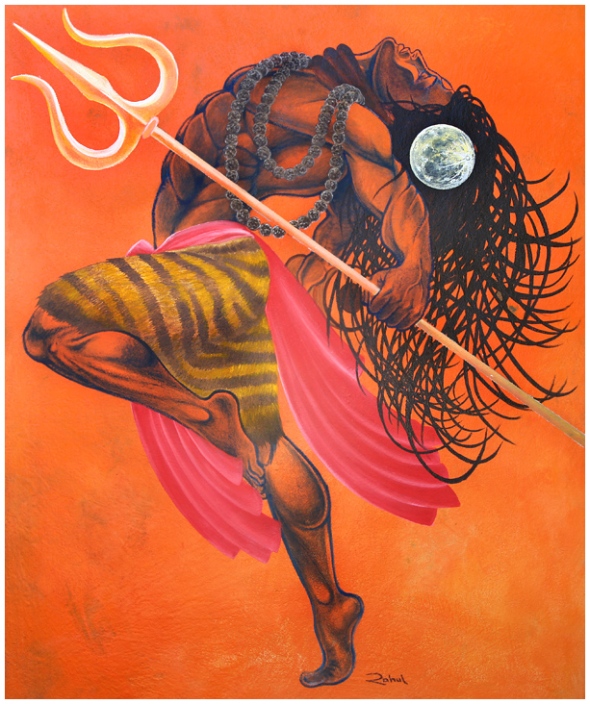
The Shiva Tandava -as the destroyer of the universe.

     ShivaA Tandav
Lord Shiva is also known as Nataraj, the Dancing God. This divine art form is performed by Lord Shiva and his divine consort Goddess Parvati. The dance performed by Lord Shiva is known as Tandava. Shiva’s Tandava is a vigorous dance that is the source of the cycle of creation, preservation and dissolution. Tandava depicts his violent nature as the destroyer of the universe.

Om Namah Shivaya

sadhvi
    Aum
Om or Aum is the pranava or seed mantra of all mantras. The two syllables na- and mah- can be translated as “I humbly bow to you”. The three syllables shi-vaa-ya invoke Lord Shiva and all his energies to bless us and lead us to the highest state of peace and meditation. The mantra should ideally be chanted twice a day (morning and evening) for 108 times each. The two words, namah and shivaya, are also referred to as the panchakshara (five letter) chant. It is said that those who chant these five holy letters while meditating on Lord Shiva will be blessed by visions of Shiva – the Lord of the yogis.

Statue of God – The sadhu

     bal sadhu
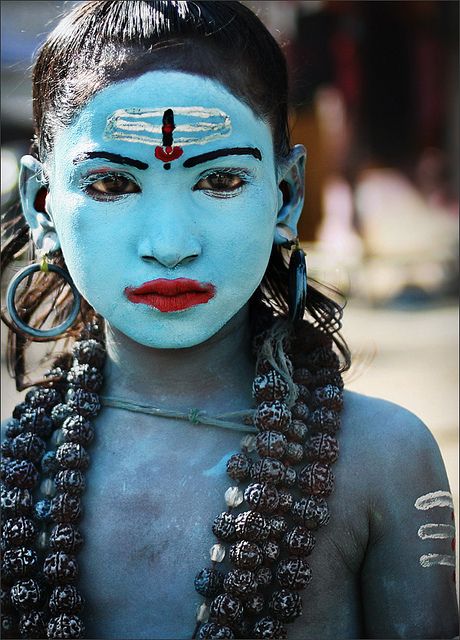
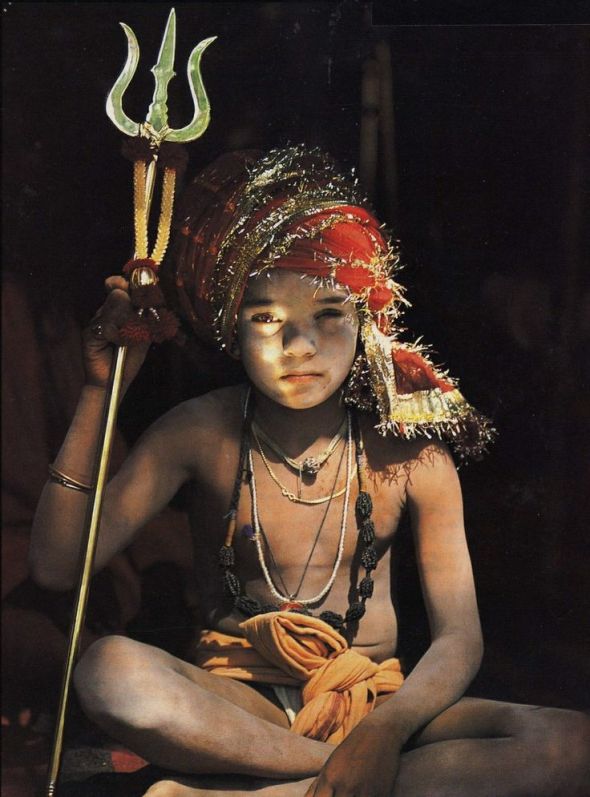
India is the Land of Gods, and we see and serve to god in the form of sadhu….
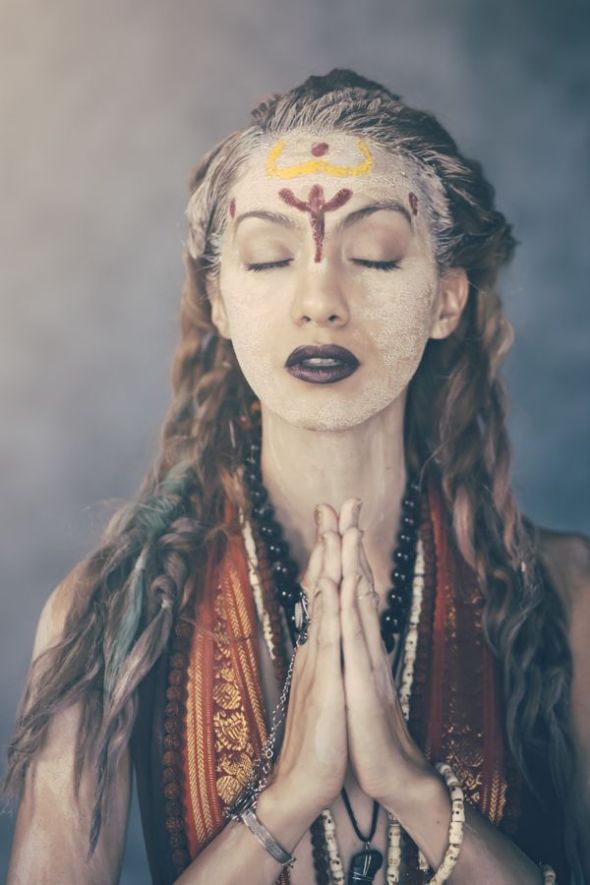
The Sadhu usually wears on his forehead the three lines of the god’s trident drawn in ash or sandalwood paste which may be vertical or horizontal. Endless variations of these sectarian marks, depending on the sect, are possible. They may decorate their bodies with various lines and markings, cover the entire torso with ashes, carry a metal trident and wear rosaries. The hair and the beard are uncut and matted.The Sadhu is credited with much of the development of Indian culture, art, architecture, music, poetry and literature, influencing and forming the very world he has abandoned with his endless travels from one sacred site to another, singing songs and reciting poetry and carrying icons, paintings and other sanctified objects.


lord of the cremation – Shiva

                          shiva
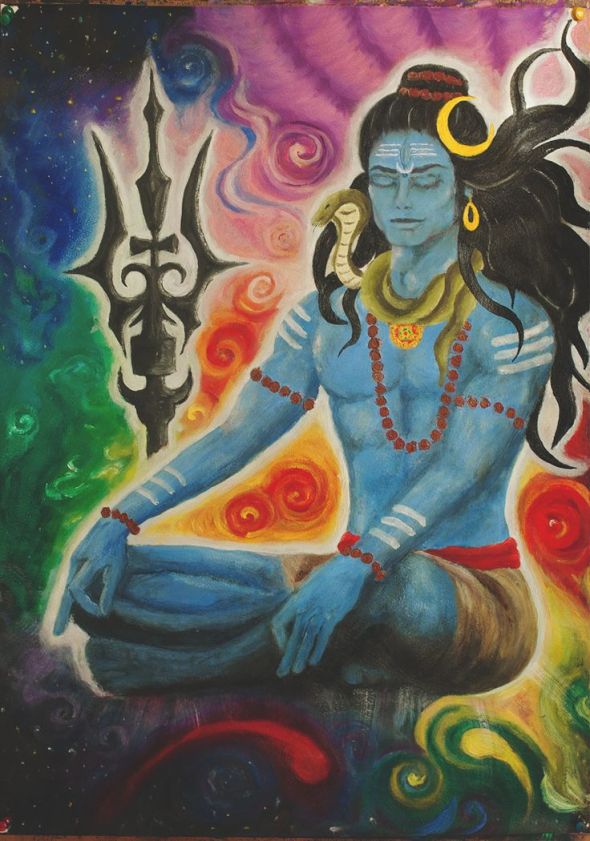
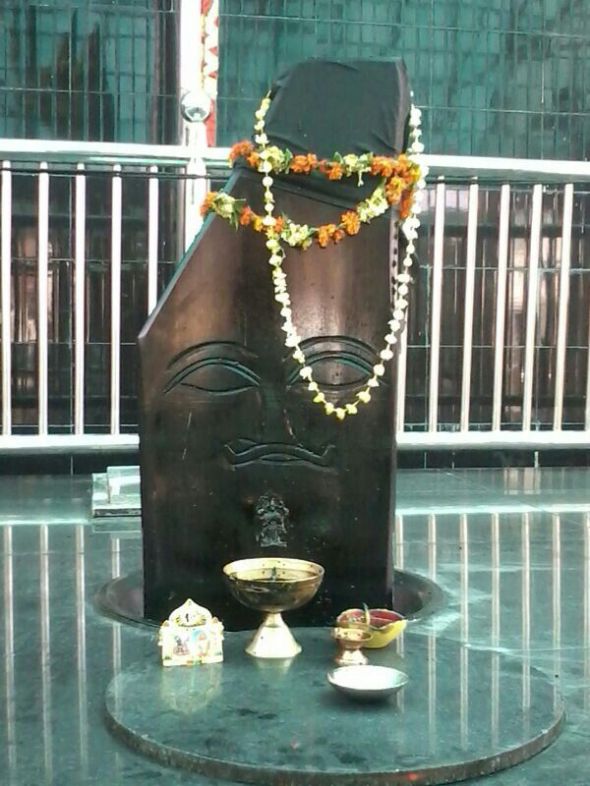
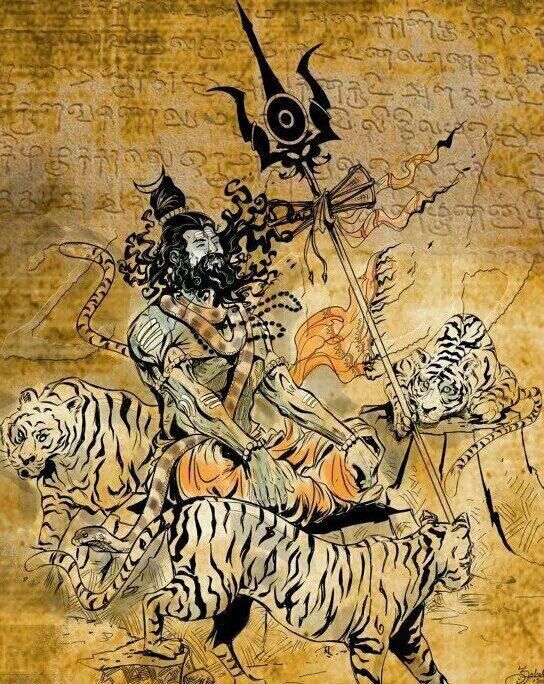
Shiva, the third god of the Hindu triadition, has three eyes, the third one (between the eyebrows) being usually closed, except at the time of destruction of things. He wears long hair, supports the holy Ganga river on his head and the crescent moon on his matted hair. He has two to four arms, holds a trident in his hand, is naked except for a tiger-skin, besmears himself with ash and is decorated with snakes on his head, neck and arms. He is very fair-coloured but has a blue throat due to his having drunk poison during the time of the churning of the ocean by the gods. In his other hands he holds an axe, an antelope, and an hour-glass shaped drum called a ‘damru’. He wears a garland of skulls and is also known as the lord of the cremation grounds. His consort is Parvati and he is the father of Ganesha and Skanda (Kartikeya). His vehicle is the bull called Nandi.

The Mahamrityunjaya – Victory from death

shiva.
Mahamrityunjaya Mantra is one among the finest Mantra’s in Indian Mythology and Spirituality belongs to Lord Shiva.It is a combination of three hindi language words i.e. “Maha” which means Great , “Mrityun” means Death and “Jaya” means Victory which turns into Conquer or victory over death. It is also known as “Rudra Mantra” or “Trayambakam Mantra”. Rudra refers to Lord Shiva.
Om Trayambakam Yajamahe, Sugandhim Pushti Vardhanam,
Urvarukmiv Bandhanat, Mrityurmokshaya Mamratat.

त्रयम्बकं यजामहे सुगन्धिं पुष्टिवर्धनम् ।
उर्वारुकमिव बन्धनान् म्रुत्योर्मुक्षिय मामृतात् ॥

The Shani Dev – one of the nine Navagraha or planets

799c8f85f8b7f5ff8ee2de3b53eaf996

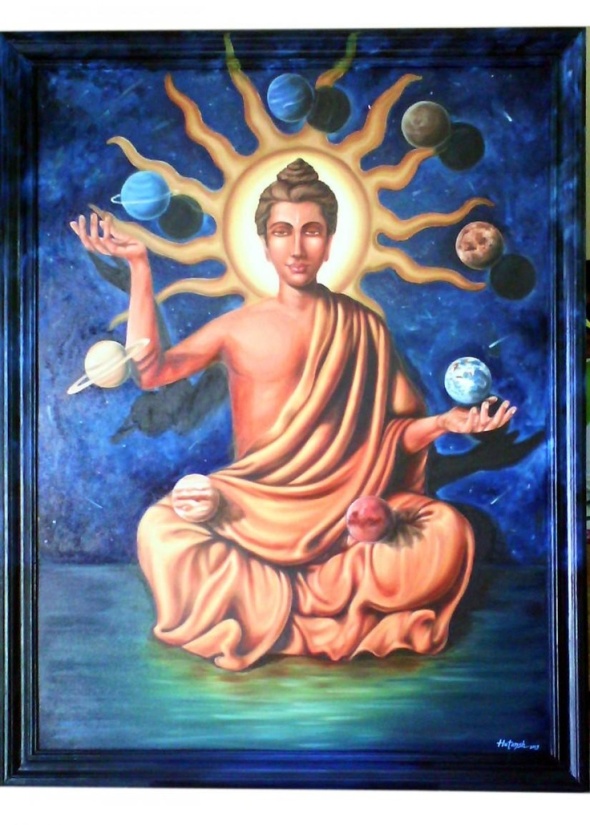
ShaniDev is one of the (Planet)”Navagraha ”which are the nine primary celestial beings in Hindu astrology, or Mtyhs. The word Shani (Saturday) also denotes the Seventh day or Saturday in most Indian languages.Shanaye Kramati – the one who moves slowly, as Saturn takes about 30 years to rotate around the Sun. Shani is also known as Shanaiscarya, Shani Bhagavan, Shaneesvara, Saneesvara, Shaneesvaran, Shani Deva.

Shani is a Lord and son of Surya (the Sun God) and his wife Chhaya (goddess of Shadow) and hence also known as Chayyaputra. He is the cousin of Yama, the Hindu God of death. It is said that when he opened his eyes as a baby for the very first time, the sun went into an eclipse, which clearly denotes the impact of Shani on astrological charts. He is known as the greatest teacher. He is known in Hindu scriptures as the greatest trouble maker as well as the greatest well wisher. He is depicted dark in colour, wearing cloths in black, holding a sword, arrows and two daggers and variously mounted on a black vulture or a raven.

The Sura Dev – The maker of day

       10cc4a0d657ef070f52d40133c4f874f
Surya (Sun God) is the chief solar deity in Hinduism.In Hindu religious literature, Surya is notably mentioned as the visible form of God that one can see every day.Surya is the son of Sage Kashyapa and Aditi.He has two wives Samnja and Chaya.Surya is, the ruler of the worlds, who is crowned with rays, who appears at the horizon, who is greeted by gods and demons, and brings light.He constitutes created beings, He is the life-breath, the source of the seasons, the store-house of light, an offspring of Aditi, the progenitor, the Sun-God, the courser in the heavens, the nourished, the possessor of rays, the golden, the brilliant, the One whose energy constitutes the seed of the universe and the maker of day.

The Shiva MahaPuran

            shivpuran

The Shiva Purana has twenty-four thousand shlokas.  There are total 18 Paranas. and number of Uppuranas. Shiva Mahapuran is one of them. Each Purana represents one God and describes him as the supreme most and glorifies him. The Purana consists of other relevant anecdotes and stories, also which make it more interesting . At the same time, it makes us available . Some historical facts, also . By studying these Puranas., we can learn how to find some solace while experiencing struggle and hardships in life. Puranas. have kept our cultural values alive. They have nurture our spiritual progress, also.

Goddess Parvati

                  Paarvati

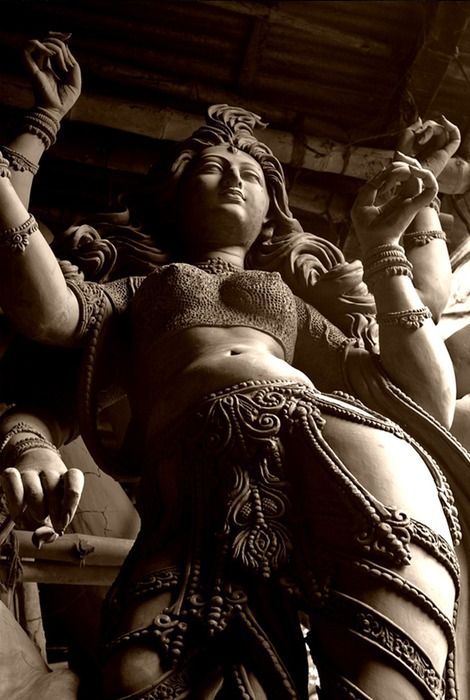
Goddess Parvati is regarded as the power and divine consort of Lord Shiva – the Destroyer. Like her consort Shiva, Goddess Parvati is said to have both mild and terrible aspects.The appearance of Goddess Parvati will vary depending on whether she is depicted alone or with Lord Shiva. When she is depicted along with Lord Shiva she has two hands with a blue lotus in her right hand and the left hand by her side.Kali is the first representation of Goddess Parvati and she was known as the destroyer. She is also known as the Goddess of time.