Are you looking for Inspired writer, Contact author vikas acharya - +91-9911275074 Email: theacharyaa@gmail.com

Showing posts with label Tantra. Show all posts

Thursday, 16 April 2015

Mayong (Assam) – Worlds Capital of Black Magic

Mayong (Assam) – Worlds Capital of Black Magic
Mayong is 34km away from Guwahati near the bank of Mighty Brahmaputra river. From time immortal, it is famous for supernatural stories. It is said that people come here from far and wide off area to learn magic. Mayong is a land of Tantra-Mantra and famous for its practice of Black Magic. Age old tradition of Black Magic is also a source of Tourist attractions. There are ample number of ancient shrines and temples in and around Mayong. The place is called the “Land of Pancha Devata”, which refers to five deities who are Dinesh, Ganesh, Vishnu, Siva and Shivi (Parvati). This is also known as the Worlds Capital of “Black Magic”.

Thursday, 5 February 2015

Kalpeshwar – Hindu temple dedicated to Lord Shiva


Kalpeshwar is a Hindu temple dedicated to Lord Shiva located at an elevation of 2,200 m in the picturesque Urgam valley in the Garhwal region of Uttarakhand state in India.Thistree is believed to fulfill all the wishes of a person. There is a cave temple situated at height of 2134 mtr and Shiva is worshiped here in his matted hair form. Kalpeshwar is surrounded by dense woods and also terraced fields that lie in the Urgam valley.
It is the fifth temple of the Panch Kedars (five temples of Lord Shiva) and is the only temple out of five that is accessible throughout the year.At Kalpeshwarm, the matted hair or Jata of lord Shiva are the object of worship and because of this, Lord Shiva, is also called Jatadhari and Jateshwar.

Tuesday, 27 January 2015

“Om Hrim Sum Suryaya Namah”


“Om Hrim Sum Suryaya Namah”
The mantras are chanted on japa beads of 108 beads per string.
In Vedic astrology, the Sun is the principal of light, life and love

Wednesday, 17 December 2014

The Samadhi

The world and ourselves are co-related and bound together, until we set ourselves free from all relativity in the world of unique reality – the eternal illimitable Samadhi.

The world and ourselves are co-related and bound together, until we set ourselves free from all relativity in the world of unique reality – the eternal illimitable Samadhi

Followers of God – The Sadhu Life

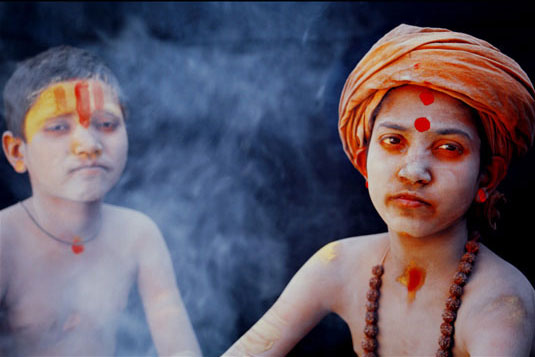
sadhu and swami, sadhu also spelled sadhu,  in India, a religious ascetic or holy person. The class of sadhus includes renunciation of many types and faiths.

sadhu and swami, sadhu also spelled sadhu, in India, a religious ascetic or holy person. The class of sadhus includes renunciation of many types and faiths.

Tuesday, 16 December 2014

Soul Practice – The Yoga or Yogi Life’s

naga

In the Classical Sanskrit of the Puranas, the word yogi  originally referred specifically to a male practitioner of yoga. In the same literature yoginī is the term used for female practitioners as well as for divine goddesses and enlightened mothers, all revered as aspects of the Divine Mother Devi without whom there would be no yogis. The two terms are still used with those meanings today, but the word yogi is also used generically to refer to both male and female practitioners of yoga and related meditative practices in Buddhism, Jainism.

Indian scriptures

sadhu tap
Hinduism has its origins in such remote past that it cannot be traced to any one individual. Some scholars believe that Hinduism must have existed even in circa 10000 B.C. and that the earliest of the Hindu scriptures – The Rig Veda – was composed well before 6500 B.C. The word “Hinduism” is not to be found anywhere in the scriptures, and the term “Hindu” was introduced by foreigners who referred to people living across the River Indus or Sindhu, in the north of India, around which the Vedic religion is believed to have originated.

Sunday, 14 December 2014

Sadhana – sacred gestures

    sadhu
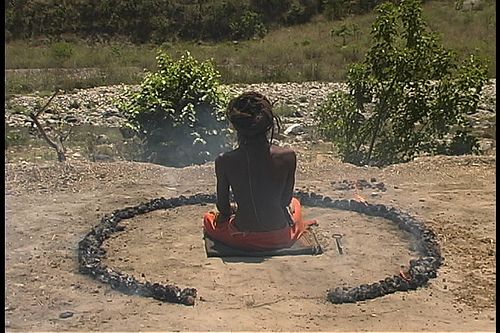
Sadhana in Hindu and Buddhist Tantrism, spiritual exercise by which the practitioner evokes a divinity, identifying and absorbing it into himself-the primary form of meditation in the Tantric Buddhism of Tibet. Sadhana involves the body in mudras (sacred gestures), the voice in mantras (sacred utterances), and the mind in the vivid inner visualization of sacred designs and the figures of divinities. Detailed instructions on how the images are to be visualized and the appropriate mantra for each are contained in written sadhanas of most divinities. One such collection is the Sadhanamala (Sanskrit: “Garland of Realization”), composed perhaps between the 5th and the 11th century. This collection of some 300 sadhanas includes those designed for various practical results as well as those intended to further spiritual realization. The written sadhanas also serve to instruct sculptors and painters.