Are you looking for Inspired writer, Contact author vikas acharya - +91-9911275074 Email: theacharyaa@gmail.com

Showing posts with label theacharyaa. Show all posts

Thursday, 5 February 2015

Gangotri – The source of River Ganga


Gangotri is the source of Ganga as Bhagirathi river.
Gangotri
Location :  Uttar Pradesh 
Altitude :  3042 mts. 
Climate :  Summer – Cool during the day and cold at night.
Winter – Snow-bound. Touching sub-zero 
Best Season :  April to November
Gangotri is at an altitude of 3048 meters above sea level. It is on the northernmost part of the state of Uttar Pradesh and is very near the Indo-Tibetan border. It is approximately 300 km from Dehradun, 250 km from Rishikesh and 105 km from Uttarkashi. The summers are relatively cool and winters are freezing cold, with rains in the months of May and June. For the devotees and tourists, the gates of the temple are open only in the months of May to November.

Tuesday, 27 January 2015

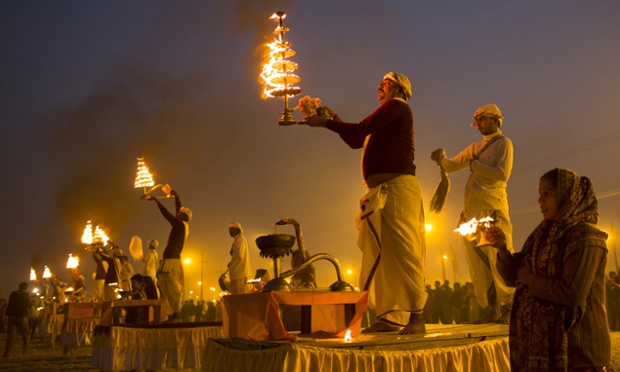
The Aarti – A Hindu religious ritual of worship


The Sanskrit word aratrika with the same meaning aarti is a Hindu religious ritual of worship, a part of puja, in which light from wicks soaked in ghee (purified butter) or camphor is offered to one or more deities.  It is a prayerful ceremony performed in extolled greeting and thanksgiving of the Deities where devotees are reminded of God’s glorious presence and providence. Often it is  performed in temples six or seven times per day.

Friday, 2 January 2015

Makar Sankranti – A harvest festival

makar sankranti

On January 14 every year, we celebrate Makar Sankranti. It is the only Indian festival celebrated on a fixed calendric day of the solar calendar. All other Indian festivals are celebrated as per the lunar calendar, which make their days of celebration on the solar calendar vary every year. Makara Sankrantiis a Hindu festival celebrated in almost all parts of India and Nepal in a myriad of cultural forms. It is a harvest festival.
Makar Sankranti has an astrological significance, as the sun enters the Capricorn (Sanskrit: Makara) zodiac constellation on that day. This date remains almost constant with respect to the Gregorian calendar. However, precession of the Earth’s axis causes Makara Sankranti to move over the ages. A thousand years ago, Makara Sankranti was on 31 December and is now on 14 January. According to calculations, from 2050 Makar Sankranti will fall on 15 January.

Monday, 22 December 2014

The YAGYA – means sacrifice, prayer


Yagya involves the application of specific prescribed sounds (Mantras), extracted from the Vedas, through recitation on a fine level of awareness by trained Vedic experts to achieve a specific effect: for example, to eliminate obstacles or defuse impending dangers, or to promote health, financial success—even world peace.

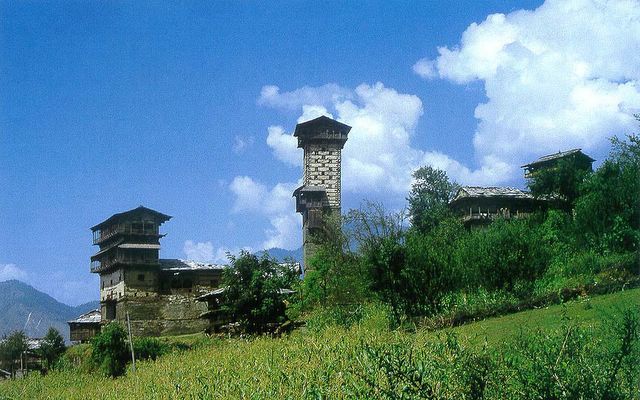
The Great Tower Temples of Kullu Valley, Himachal Pradesh, India


The Great Tower Temples of Kullu Valley, Himachal Pradesh, India are dedicated to “Shringa Rishi” who is the chief deity of Banjar valley, Kullu District, Himchal Pradesh. The temple of Shringa Rishi is situated at village Bagi.This tower temple of Chaini is the tallest standing structure of its kind in the entire Western Himalayas.This tower survived the devastating 1905 Kangra earthquake. It is believed that this temple was built around the 17th Century by a local King Dhadhu and that’s why this temple is locally known as Dhadhiya Kothi as well. The tower temple stands on a plinth, which is almost 15 meters deep, and is made of locally available stone and deodar wood.

Wednesday, 17 December 2014

The Samadhi

The world and ourselves are co-related and bound together, until we set ourselves free from all relativity in the world of unique reality – the eternal illimitable Samadhi.

The world and ourselves are co-related and bound together, until we set ourselves free from all relativity in the world of unique reality – the eternal illimitable Samadhi

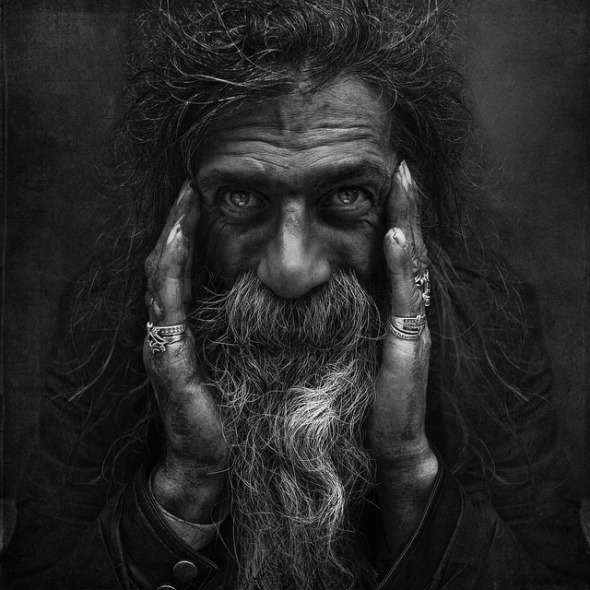
Aghori – The Epic Souls

      Aghori
To be really aware you must be able to know simultaneously what is going on thousands of miles away today, what may have happened centuries ago, what will happen anywhere in the world decades from now, and what is occurring, has occurred, or will occur on other planes of existence. And you must still act as if you know nothing. You must just sit and talk with other people and play the part which Nature has assigned to you.

Tuesday, 16 December 2014

Jyotish - the oldest system of astrology in the world

              KarmJyotish                                               Jyotish is the oldest system of astrology in the world. It’s derived

from  the  Sanskrit  word  “jyoti”  which means light.  As the pure
light of  scientific knowledge, the word Jyotish implies studying a
person’s  character,  health,  habits  and  even the future on the
basis of his or her birth chart. Jyotish  is  practiced  by  a  skilled   astrologer  by  calculating   the positions  of the  planets and  other celestial bodies with regard to a person’s birth or  happening of an event.

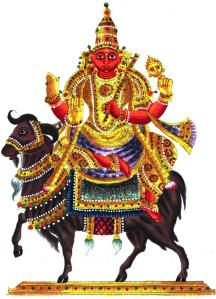
ॐ अंग अंगारकाय नमः

           Angraka_grahaPBAAH115.350210731_std
ॐ अंग अंगारकाय नमः
In Vedic astrology Mangala is considered a malefic of the first order. He rules over the signs Mesha (Aries) and Vrishchika (Scorpio), is exalted in Makara (Capricorn) and has his fall in Karka (Cancer). The Sun, Moon and Jupiter are all considered friendly to him, while he is hostile to Mercury. Venus and Saturn are neutral. Mangala represents drive and physical energy, self-confidence and ego, strength, anger, impulsiveness, heroism and adventurous nature. Mangala rules over blood, muscles and bone marrow. He is associated with battle, war and soldiers.
Rinmochan Mangal Stotram: this stotra is very helpful for gaining repayment power for loan.  If you are under heavy debt and you are failing control the situation, you may start reciting Rinmochan Mangal Stotram, great relief and help will come.

MahaKumbh Mela – opportunity to purify our soul by bathing in holy river and serving saints.

sadhu
For twelve days and twelve nights (equivalent to twelve human years) the gods and demons fought in the sky for possession of this pot of Amrita. From this nectar some drops spills at Allahabad, Haridwar, Ujjain and Nashik while they were fighting for nectar . So on earth we celebrate this festival to get the pious credits and meet the purpose of life that is going to back to godhead  our eternal home where our father is waiting for us. This is opportunity we get after associating with saints or holy man who follow scriptures.
Kumbh mela provides us this great opportunity to purify our soul by bathing in holy river and serving saints.

Pure Heart & Delight soul

SADHU

The man who is pure of heart Is bound to fulfill himself In whatever way he is taught. A worldly man seeks all his life, But is still bewildered. Detached from the senses, You are free. Attached, you are bound. When this is understood, You may live as you please.
Astavakra Gita

Monday, 15 December 2014

Lohri – The Harvest Festival of North India


Lohri is an extremely popular Punjabi agricultural winter festival celebrated throughout Punjab and in Haryana, Himachal Pradesh, Delhi and Jammu.The harvest festival of Punjab and Haryana is also referred as the bonfire festival. Huge bonfires are lit to thanks the God for abundant crops.It is celebrated on 13th of January during the month of Paush or Magh, a day before Makar Sankranti. This festival marks the departure of the winter season and onset of spring.

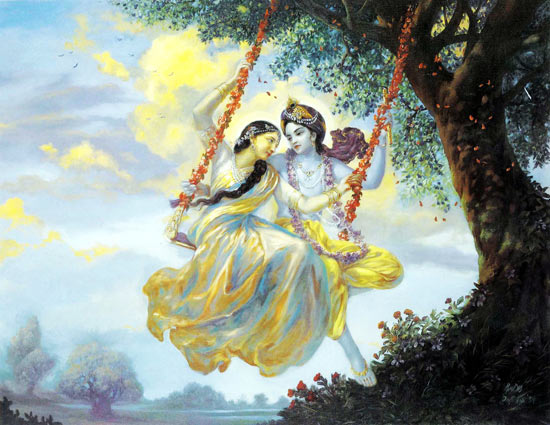
The Radha-Krishna – love legend of all times

                 
radha-krishna

radha krishna

The Radha-Krishna amour is a love legend of all times. It’s indeed hard to miss the many legends and paintings illustrating Krishna’s love affairs, of which the Radha-Krishna affair is the most memorable. Krishna’s relationship with Radha, his favorite among the ‘gopis’ (cow-herding maidens), has served as a model for male and female love in a variety of art forms, and since the sixteenth century appears prominently as a motif in North Indian paintings. The allegorical love of Radha has found expression in some great Bengali poetical works of Govinda Das, Chaitanya Mahaprabhu, and Jayadeva the author of Geet Govinda.Radha, daughter of Vrishabhanu, was the mistress of Krishna during that period of his life when he lived among the cowherds of Vrindavan. Since childhood they were close to each other – they played, they danced, they fought, they grew up together and wanted to be together forever, but the world pulled them apart. He departed to safeguard the virtues of truth, and she waited for him. He vanquished his enemies, became the king, and came to be worshipped as a lord of the universe. She waited for him. He married Rukmini and Satyabhama, raised a family, fought the great war of Ayodhya, and she still waited. So great was Radha’s love for Krishna that even today her name is uttered whenever Krishna is refered to, and Krishna worship is though to be incomplete without the deification of Radha.

Universal law – Dharma

sadhu

Dharma is an important term in Indian religions. In Hinduism it means ‘duty’, ‘virtue’, ‘morality’, even ‘religion’ and it refers to the power which upholds the universe and society. Hindus generally believe that dharma was revealed in the Vedas although a more common word there for ‘universal law’ or ‘righteousness’ is rita. Dharma is the power that maintains society, it makes the grass grow, the sun shine, and makes us moral people or rather gives humans the opportunity to act virtuously.

Classical Hinduism

sadhu

An important idea that developed in classical Hinduism is that dharma refers especially to a person’s responsibility regarding class (varna) and stage of life (ashrama). This is called varnashrama-dharma. In Hindu history the highest class, the Brahmins, adhered to this doctrine. The class system is a model or ideal of social order that first occurs in the oldest Hindu text, the Rig Veda and the present-day caste (jati) system may be rooted in this.

Dharma shastras

sadhu
Hinduism developed a doctrine that life has different goals according to a person’s stage of life and position. These goals became codified in the ‘goals of a person’ or ‘human goals’, the purusharthas, especially in sacred texts about dharma called ‘dharma shastras’ of which the ‘Laws of Manu’ is the most famous. In these texts three goals of life are expressed, namely virtuous living or dharma, profit or worldly success, and pleasure, especially sexual pleasure as a married householder and more broadly aesthetic pleasure. 

Sunday, 14 December 2014

The Bhakti – an expression of love

Bhakti is an expression of love, devotion and faith centered upon the Supreme Person rather than the Supreme Abstraction. It became a popular folk movement which was very strongly opposed by the Brahmins as it disregarded traditional Vedic rituals, ignored caste differences and placed devotion over knowledge. The Bhagavad Gita is the first major expression of Bhakti which, over the centuries spread throughout the country through the wandering holy men and sadhus. It became the religion of the great masses of India for it enabled the individual to approach the Divine directly and become part of His all-encompassing love.


Sadhana – sacred gestures

    sadhu
Sadhana in Hindu and Buddhist Tantrism, spiritual exercise by which the practitioner evokes a divinity, identifying and absorbing it into himself-the primary form of meditation in the Tantric Buddhism of Tibet. Sadhana involves the body in mudras (sacred gestures), the voice in mantras (sacred utterances), and the mind in the vivid inner visualization of sacred designs and the figures of divinities. Detailed instructions on how the images are to be visualized and the appropriate mantra for each are contained in written sadhanas of most divinities. One such collection is the Sadhanamala (Sanskrit: “Garland of Realization”), composed perhaps between the 5th and the 11th century. This collection of some 300 sadhanas includes those designed for various practical results as well as those intended to further spiritual realization. The written sadhanas also serve to instruct sculptors and painters.